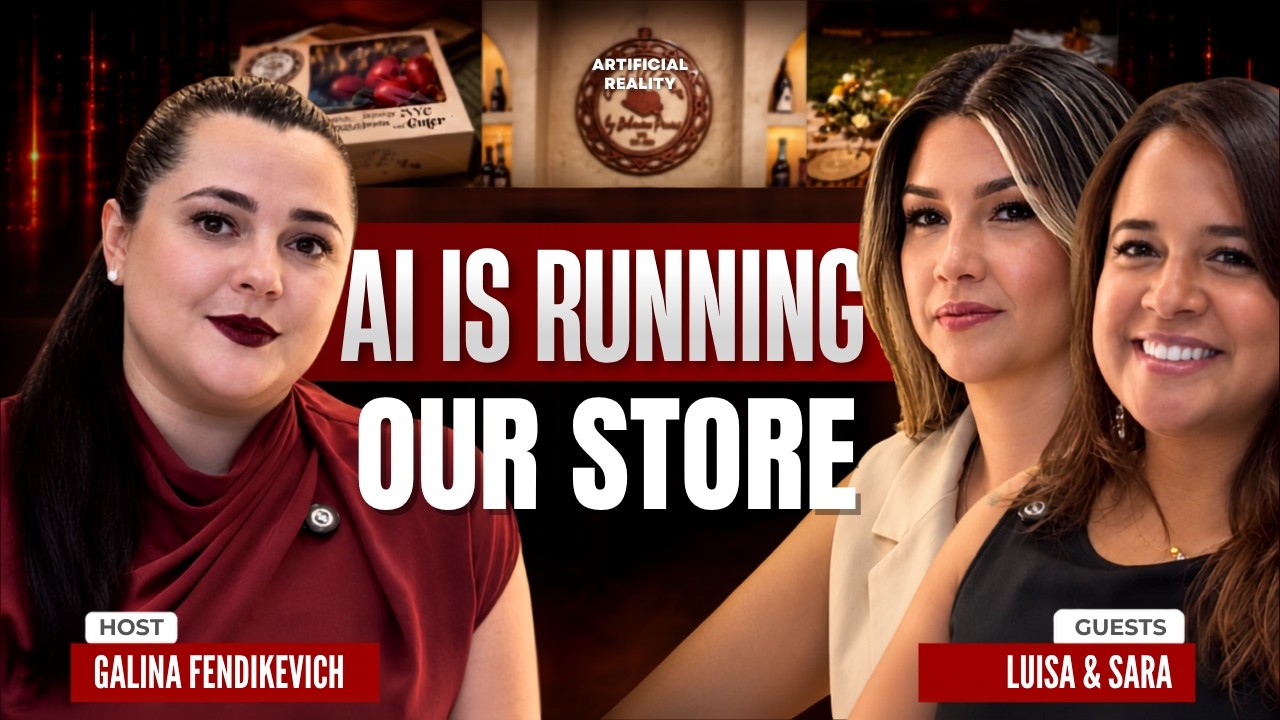
S2E2: The secret AI strategy this small NYC business uses to save thousands
Two co-owners of a charcuterie shop off Central Park on the AI that replaced a hire, the agency quote they refused, and the proposal that still takes three days.
Artificial Reality
The full conversations. One operator, one industry, three questions: what worked, what didn't, and what they wish existed.
See all →
Two co-owners of a charcuterie shop off Central Park on the AI that replaced a hire, the agency quote they refused, and the proposal that still takes three days.
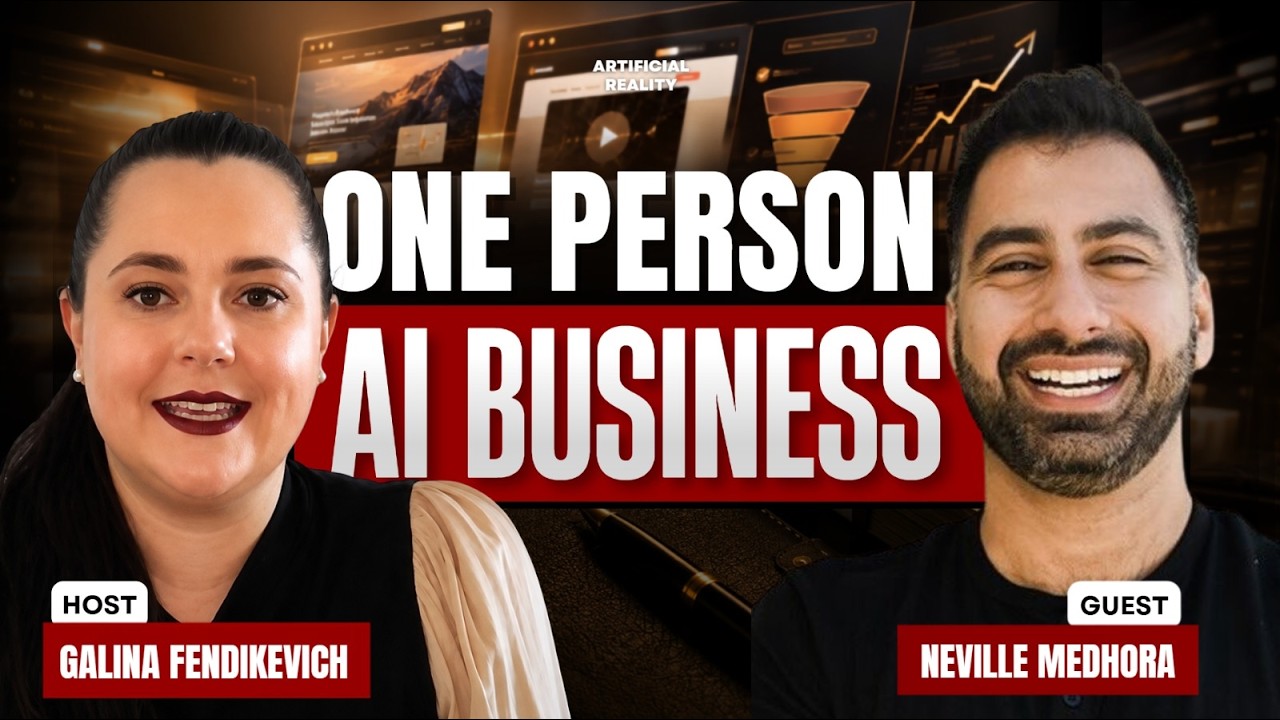
Swipe File owner and 20-year copywriter Neville Medhora on how AI killed his main business, made a dormant side project his primary revenue, and why he runs it all on a $20 ChatGPT subscription.
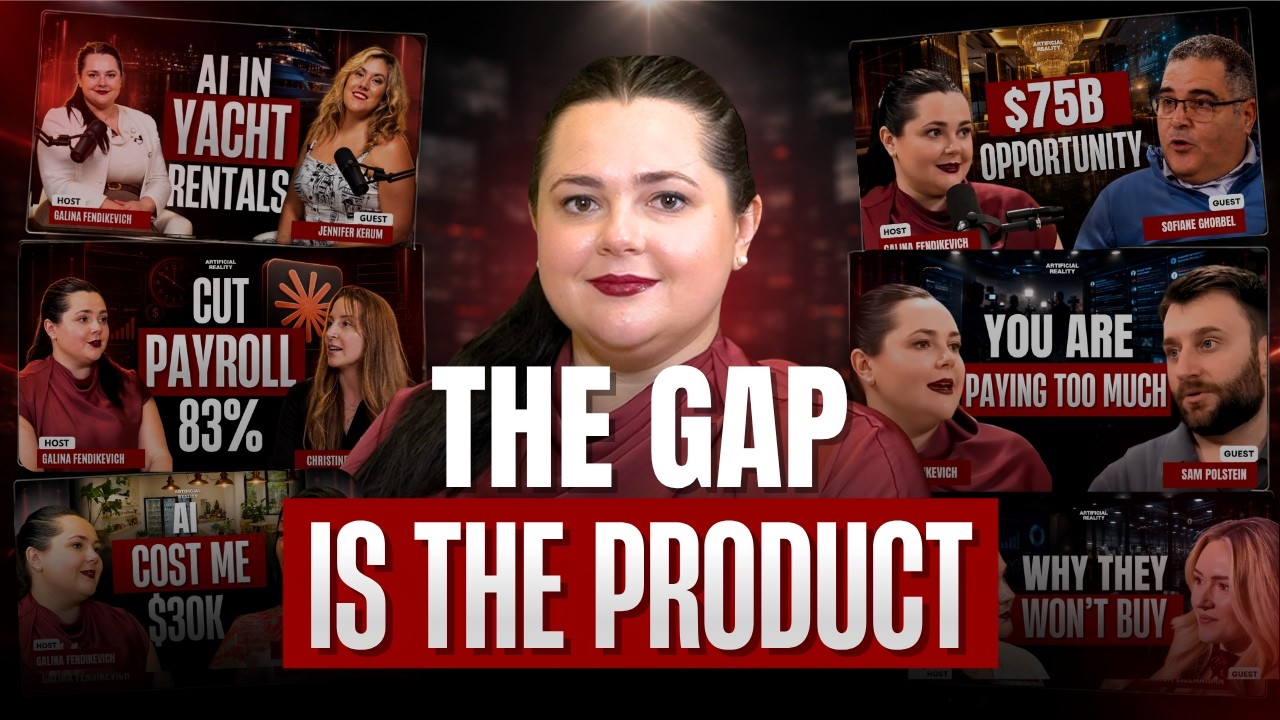
Six operators, seven industries, three questions each. Galina Fendikevich puts season one side by side: every real AI win was invisible, every real failure was public, and six executives described the same missing product.
AI that operators kept using after the trial ended, with the tool named and the result stated.
See all →
Cross-company coordination, not internal workflow. What a subcontractor communication hub must do, and the six questions to ask before signing.

Dr. Nikki Siso designed her label in Canva, found AI output templated, and paid a $10,000-a-client designer $1,000 to make it print ready.

She tells Claude to pretend to be five very difficult clients and walk the whole flow. The bugs turn up. Here is the method, step by step.

Sam Polstein builds competitor dashboards and answer engine analytics with no coding experience, replacing reporting that once cost $20,000 a year.
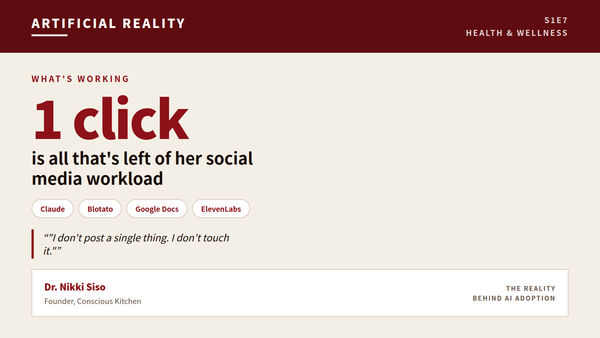
A Claude, Blotato and Google Docs pipeline schedules her Instagram weekly with one approval click. The tone work still takes hours, and she says so.

Vendor pricing once meant calling 5 to 10 suppliers. Annija Eizenarma names the construction workflows where AI is working now, and one that isn't yet.
Where the tool was bought, deployed, and quietly abandoned — and what it cost to find out.
See all →
The GC buys it and the subcontractor is asked to change for free. Why construction coordination products stall, and the inversion nobody has built.
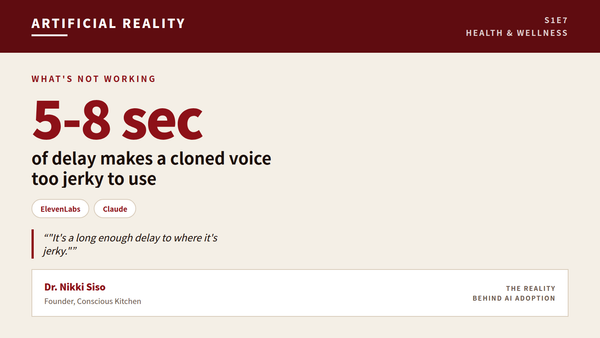
A health practitioner put her cloned voice on the shelf over a five-to-eight-second delay. What to test before you buy a voice tool.

A permit filed before the mechanical plan cost Conscious Kitchen $30,000. What general-purpose AI missed, and five checks to run before you build.

Booking is the fourth of eight stages a luxury travel advisor works through. Software clusters there and thins out at inquiry and loyalty.

Because the steps do not chain. What an M&A broker still does by hand, what Blaze AI, Predis.ai, FeedHive and Ocoya cover, and six tests before you buy.

Jennifer Kerum tried to build her own client intake platform with no technical background. Her verdict, and the six checks to run before you start.

EveryBite, Fig, Spokin and Foodini compared on what each actually checks, plus the questions to ask before handing over a health profile.
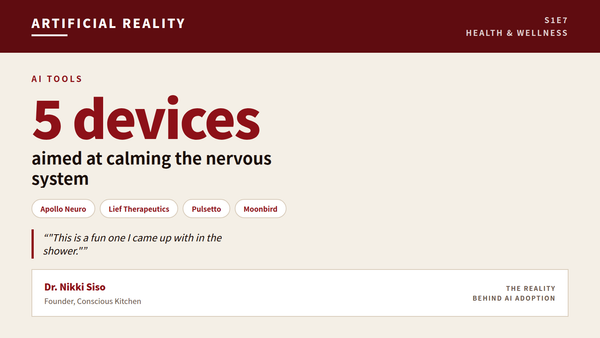
Apollo Neuro, Lief Therapeutics, Pulsetto, Oxa and Moonbird, what each one actually does, and how to choose between detection and intervention.

Four AI platforms for travel advisors, scored against the eight-stage workflow a luxury operator described. None of them covers all of it.

Yes, but only as a recording. Threshold 360, CloudPano and EXP360 compared for luxury travel previews, and what none of them can do yet.

Five funded products generate floor plans and electrical systems from a prompt. What each one covers, and how to evaluate them before you buy.

Slite, Guru, Onyx and Vectara search a company's private notes. A yacht broker lost 90 minutes to a search none of them was built for.
Operators describing the product they would pay for, in their own words.
See all →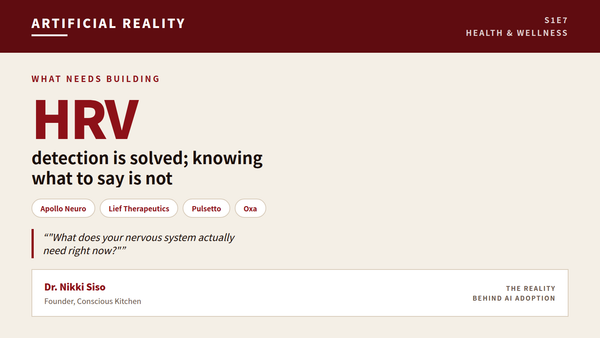
HRV detection is solved. Knowing what to say to this particular person is not. The personalization layer a health practitioner wants built.

Diners who quit restaurants are the most underserved group in food service. Why menu compatibility AI stalls, and which restaurants unlock it.

Construction AI markets generation speed. Nobody reports how much output survives engineer review unchanged, and that is the figure buyers need.
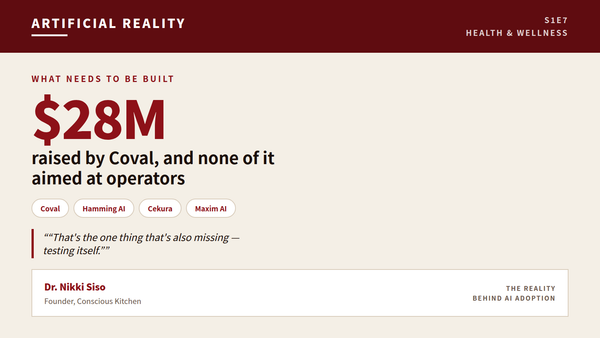
Coval, Hamming AI, Cekura, Maxim AI and LangWatch are built for engineers. The operator who needed testing most improvised it with a prompt.

Every AI knowledge product assumes the knowledge is already written down. In expert businesses it exists as an impression, and then it is gone.

Monitoring platforms know the news, not your clients. The comms product request Sam Polstein described, the nine requirements, and the gap for builders.
Standalone asks pulled from the interviews, for the teams who build this software.
See all →
A charter broker benchmarks AI builders against website builders. One intake flow needs three vendors, which is the whole answer.
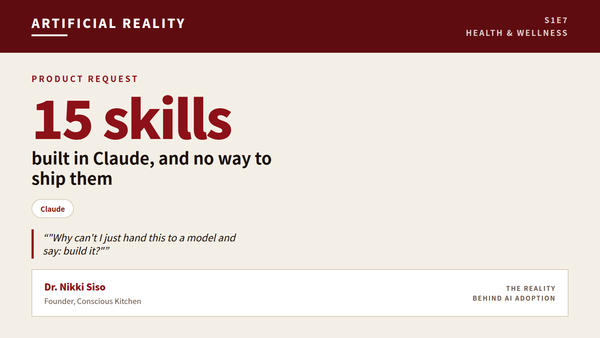
Dr. Nikki Siso built a fifteen-skill AI assessment in Claude, then had to hire a developer. The gap is deployment, not intelligence.

Dr. Nikki Siso named four AI products she wants built for restaurants: menu compatibility, permitting, print-ready labels and recipe costing.

An operator's product request in one line. AI answered the label question she asked and never told her the file needed bleed to reach a printer.

A luxury hospitality CEO wants clients to meet their concierge in a headset before booking. Every VR travel product ships the room without the person.

Christine McDannell takes five deals at a time and reports a seven-month close on infrastructure she assembled herself. What she wants built instead.
The Operator Brief
The tools operators kept, the ones they dropped, and what it cost to find out.
The Builder Brief
Product gaps in operators' own words, straight from the interviews.
 →
AI in
Construction
16 articles
 →
AI in
Creative
18 articles
 →
AI in
Cross industry
14 articles
 →
AI in
Health & wellness
17 articles
 →
AI in
Hospitality
15 articles
 →
AI in
M&A advisory
14 articles
 →
AI in
Public relations
13 articles
 →
AI in
Restaurants
17 articles
 →
AI in
Retail & events
14 articles