What Dr. Nikki Siso wants AI companies to build for restaurants
Dr. Nikki Siso named four AI products she wants built for restaurants: menu compatibility, permitting, print-ready labels and recipe costing.
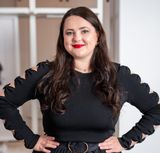

Four products, named on the record by one operator. Dr. Nikki Siso, a certified holistic health practitioner and founder of Conscious Kitchen in Westlake Hills outside Austin, asked Artificial Reality for a menu compatibility tool for diners, a localized permitting copilot, a print-ready label assistant, and a recipe costing tool that does not cost $150 a month.
She runs a raw, organic, plant-based, gluten-free kitchen, and every one of the four came out of something she tried to do and could not. Artificial Reality, the AI buyer-evidence podcast hosted by Galina Fendikevich, records these asks with the operator attached.
Which product does she want most?
The menu compatibility tool, by a wide margin. Dr. Nikki Siso wants a system that takes a diner's dietary restrictions and health conditions and maps them against a specific restaurant's actual menu, dish by dish.
"If anyone out there is producing an AI tool that will create a meal plan that specifically links to a restaurant's menu items that would serve them — or if they could walk into a restaurant and they could get a list of what to avoid in that shop — that would be gold. Gold, gold, gold."
Her offer, unprompted:
"Please, if you develop this AI tool, come to Conscious Kitchen, find me. I will promote this magic."
Her reason is her own customers: people who come into Conscious Kitchen and no longer eat at restaurants at all, because they do not trust the food and it makes them feel sick. She is clear about her own limits too: walnuts are on her menu, so some dishes would still flag.
The interaction model exists elsewhere. Siso pointed to barcode scanners that return a verdict on a product's ingredients; Galina Fendikevich named Bobby Approved, which she uses for groceries. Nothing equivalent exists for a restaurant menu.
What would a restaurant permitting copilot have to do?
Give the correct order of operations, starting with which professional to engage first. The request came out of a $30,000 sequencing mistake, and Siso endorsed it immediately: "Yes, that would be incredibly supportive."
"AI was missing the step-by-step guidance that I really needed ... For some reason it didn't know: start with the MEP."
Her requirements:
- The order of operations, beginning with the first professional to hire
- Genuinely local coverage. Austin's requirements ran roughly ten times longer than neighbouring Westlake Hills', and even the correct search term differed
- What inspectors actually check on site — refrigerator temperatures, water reaching 110 degrees, required signage — not only what the department publishes
- The documents that have to be physically posted
- Help completing the applications themselves, which she endorsed with "100%"
On scope she is specific: stay local. "The local is already concerned about federal, is my understanding ... But it is region by region."
Why does the label request split in two?
Because design quality and print readiness are different problems, and only one looks solvable to her. Siso wanted a print-ready label and did not get one: "I didn't even know you needed the borders."
The design half she is doubtful about. The output was "very template looking ... it just didn't have the elegance and the sophistication that I was really looking for," and a professional fixed it with adjustments of a line or a millimetre. Her assessment: "I don't know that AI has that skill yet ... a human element would still be needed there."
The production half is tractable:
"Even adding the print ready option. Like there should be a link: make this print ready. Because now if colors go to the edges, I need to have a bleed section. I didn't know that. How would I know this?"
What is wrong with recipe costing today?
The price, and the fact that a general-purpose model could not replace it. Purpose-built recipe costing software runs around $150 a month by Siso's account, hard to justify on a tight budget. Her own build broke on the spreadsheet:
"I had one hell of a time getting it to actually fill in the spaces on the Excel chart. For some reason it did not want to fill in the blanks. Or it would just duplicate and it would be the wrong values."
What it has to do: convert a pound of almonds bought at $24 into the cost of one cup, divide by yield so a pie becomes twelve slice costs, and update as ingredient prices move. A separate ask is setup budgeting, which she distinguishes from demand forecasting she doubts can be perfected. Her build came in at $85,000 against a $30,000 plan, and she did not know the cost of the fridges, the sinks or the insurance.
What do the four requests have in common?
Every one is information that already exists in the world and was unavailable to the person who needed it, when she needed it. The inspector's checklist exists. The bleed requirement exists. The cost of a commercial fridge exists. The ingredients in a dish exist. None of it is secret, and none of it reached her.
That is a duller problem than most AI product ideas and a more solvable one. Siso's division of labour holds across all four: "AI is the starting point. AI gives you the foundation, the base of knowledge and wisdom. You can use it that way. And then you add the human element into it to make it a masterpiece."
If you are building in any of these categories, the next step is not more customer discovery. Take her requirements as a specification, decide which half you already do, and go to Westlake Hills, where she has already said she will promote the menu tool.
Where this comes from
S1E6: I trusted AI to build my restaurant, it cost me $30,000 — the full interview with Dr. Nikki Siso. Listen or watch: YouTube, Spotify or Apple Podcasts.