How a $1,000 designer finished what AI and Canva started
Dr. Nikki Siso designed her label in Canva, found AI output templated, and paid a $10,000-a-client designer $1,000 to make it print ready.
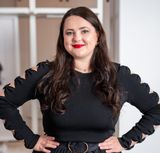

Design the concept yourself, then pay a professional to finish it. That hybrid is what produced a usable product label for Conscious Kitchen. Dr. Nikki Siso, the certified holistic health practitioner who founded it in Westlake Hills, just outside Austin, built her version in Canva, found AI-generated alternatives templated, and paid a brand designer of thirty years — one who normally charges $10,000 a client — $1,000 to finish the job.
What did AI actually produce?
A design she read as generic rather than premium. Siso is not a beginner with design tools, which is what makes the assessment useful.
"I wrote out using Canva. I'm very well versed with Canva, so I created what I thought looked pretty decent as a label, like my general idea."
On the AI attempt specifically:
"The AI generated a very template looking output. It wasn't elegant, high vibe, classy designer. It was: this has been made for a generic brand, very like a little bubbly. It just didn't have the elegance and the sophistication that I was really looking for."
What did the professional change?
Millimetres. Siso could not name what was missing until she saw it done, and her description is the most precise account of design judgment in this research.
"He moved things over a millimeter, and put a very thin line somewhere. He did little microscopic adjustments that made it look popped, like gorgeous. And I don't know that AI has that skill yet. I think it really is running off template style formats. So if you want to stand out as a brand, I think a human element would still be needed there. Maybe that will change."
Her reaction to the first version he sent: "done. Yes. There was nothing to change. It was beautiful. And the night and day difference between what I designed and what he designed."
Why did a $10,000 designer charge $1,000?
Because he had opened his practice to startups and sole proprietors, which Siso is careful to say had nothing to do with her brief. A friend made the introduction.
"He helped me find a really high-end quality brand design guy that's been doing this for 30 years. He was magnificent. He normally charges $10,000 a client, but ... for a thousand dollars, this man took what I designed and made it profound in minutes. I mean, he probably took 24 hours with it."
The direction already existed when he started. That is the part of the workflow worth copying: she did not commission a label, she commissioned a finish.
What made her file unusable at the printer?
No bleed. A colour running to the edge of a label needs extra image beyond the trim line so it survives cutting, and nothing in her process mentioned it.
"This is something that I really wish AI could have supported me with — a print ready label. I didn't even know you needed the borders."
"Even adding the print ready option. Like there should be a link: make this print ready. Because now if colors go to the edges, I need to have a bleed section. I didn't know that. How would I know this? A designer needed to show me that."
A print-ready file has a bleed area — extra image beyond the trim line — plus the resolution, colour profile and file format your printer will accept. Galina Fendikevich's observation in the interview: AI does not consider how its output will be used downstream. It produces an image, not a manufacturable file.
How should you run this yourself?
- Separate compliance from design before you shop. They are different purchases from different vendors. Food Label Maker and ReciPal generate nutrition labels calculated from recipes, and MenuSano does nutrition analysis; Packify.ai works on packaging design.
- Solve the nutrition panel with software. Calculating regulated content from recipe data is well handled and not worth doing creatively.
- Ask your printer for their spec sheet first. This is the step Siso did not know existed, and it costs nothing.
- Design your own concept anyway. Hers is what the professional worked from, and it is why the finish took a day rather than a project.
- Send a real file to your actual printer early. Bleed, colour profile and resolution problems surface there and nowhere else.
- Budget against the reprint, not the design fee. A label is expensive to reprint and public when it is wrong.
If your product is premium, the evidence here is that the finishing pass is still human and still cheap relative to what it changes. Get your concept to the point where a designer's job is an afternoon of adjustment rather than a blank page, then ask what that afternoon costs. Siso's answer was $1,000, and she reports there was nothing left to change.
Where this comes from
S1E6: I trusted AI to build my restaurant, it cost me $30,000 — the full interview with Dr. Nikki Siso. Listen or watch: YouTube, Spotify or Apple Podcasts.