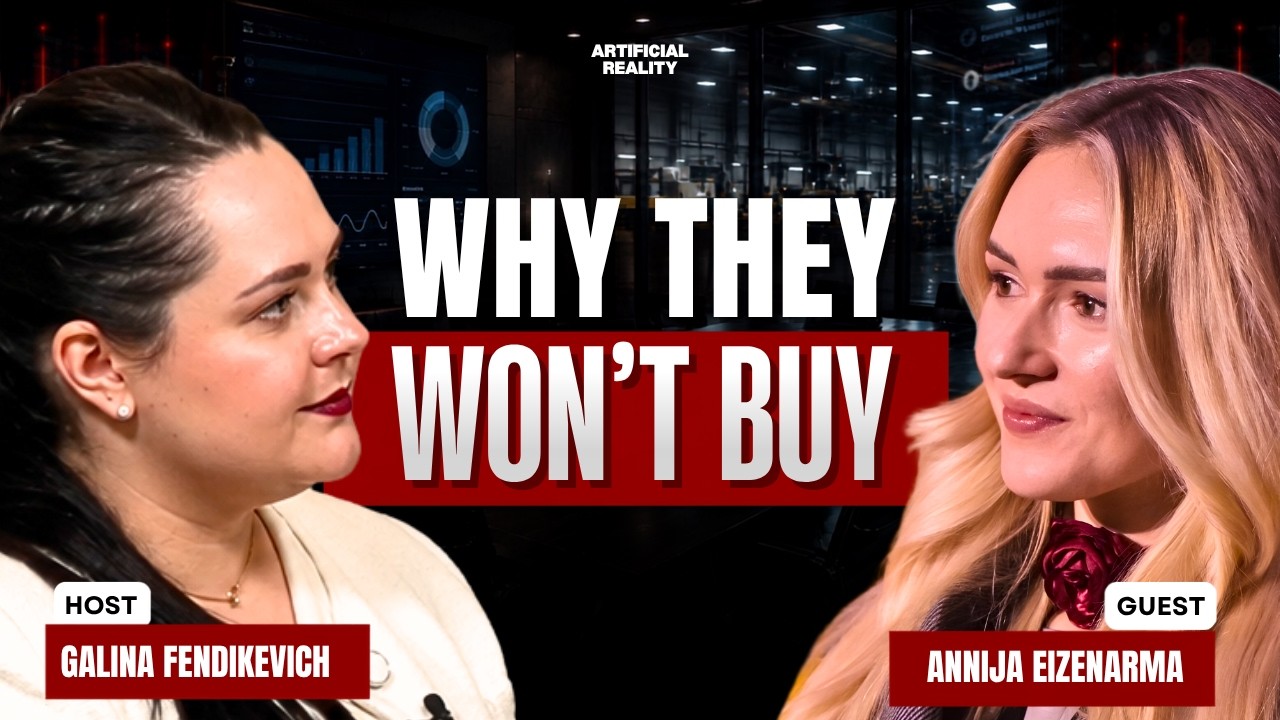
S1E1: They do $20M a year on sticky notes
Annija Eizenarma on why $20M legacy businesses still run on paper, what makes an AI pilot stall at month three, and how operators judge a vendor.
How construction and trades businesses are actually using AI — estimating, bids, site documentation and the tools that did not survive the job site.
The full conversations from this industry.

Cross-company coordination, not internal workflow. What a subcontractor communication hub must do, and the six questions to ask before signing.

Vendor pricing once meant calling 5 to 10 suppliers. Annija Eizenarma names the construction workflows where AI is working now, and one that isn't yet.

Annija Eizenarma on why the AI companies that sell into construction solve one task first: one design partner can open 15 doors, then 100.

The GC buys it and the subcontractor is asked to change for free. Why construction coordination products stall, and the inversion nobody has built.

Legacy operators dislike the software they own and still cannot switch. Annija Eizenarma on why sunk integration cost is a product spec, not an objection.

Annija Eizenarma on the records legacy operators need in order before onboarding, and why missing them turns an AI rollout into months of assembly.

A $20 million business run on sticky notes cannot tell a real AI product from a wrapper. Annija Eizenarma on what to evaluate instead of the technology.

Integration costs of $500,000, contracts running five to ten years, and onboarding that takes months: why AI deals in legacy industries die before output.

Five funded products generate floor plans and electrical systems from a prompt. What each one covers, and how to evaluate them before you buy.

Siteline, Adaptive, Briq and Ontik, judged against what one legacy-industry adviser says a contractor actually needs from invoice automation.

Kojo, SubBase, ProcurePro and Parspec compared on what each collects, who they serve, and the coverage question to ask before you sign.

Construction AI markets generation speed. Nobody reports how much output survives engineer review unchanged, and that is the figure buyers need.

Transaction-readiness banks on one side, developer data tools on the other, and nothing between them for a non-technical owner who is not selling.

Four funded procurement platforms, one unsolved constraint: the vendors who must respond bought nothing. What that caps, and the asset nobody sells.
The Operator Brief
One business a week: the AI tools they kept, the ones they dropped, and what it cost to find out.
You are joining the operator brief. Building AI products instead? Compare both briefs.
 →
AI in
Construction
16 articles
 →
AI in
Creative
18 articles
 →
AI in
Cross industry
14 articles
 →
AI in
Health & wellness
17 articles
 →
AI in
Hospitality
15 articles
 →
AI in
M&A advisory
14 articles
 →
AI in
Public relations
13 articles
 →
AI in
Restaurants
17 articles
 →
AI in
Retail & events
14 articles
