What a swipe file is, and why marketers keep one
A swipe file is a marketer's personal archive of ads kept for reference. What the term means, where it came from, and what one looks like fully automated.

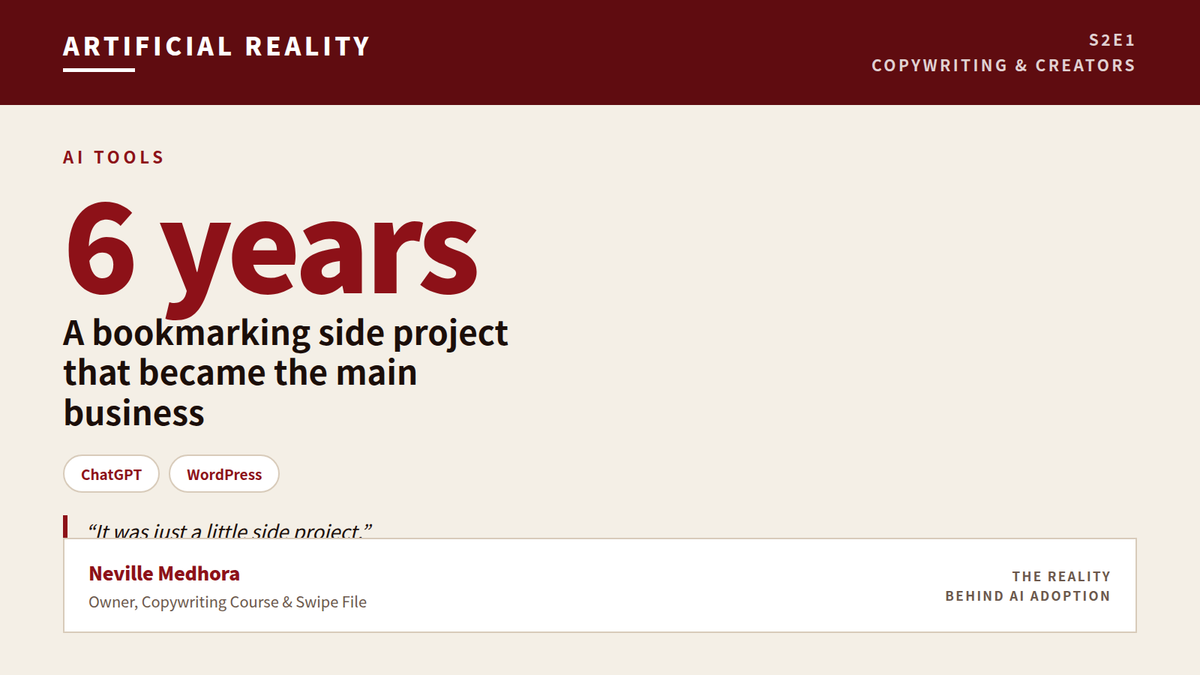
A swipe file is a marketing practitioner’s personal archive of advertisements and creative examples, kept for inspiration and reference rather than for direct copying. The term predates the internet: the original was a physical folder. Neville Medhora, who runs Swipe File as a business, describes it as “a physical folder of direct mail, advertisements you get in the mail, for inspiration for later.”
How is a swipe file different from a mood board?
A mood board collects aesthetics. A swipe file collects things that worked — ads that ran, emails that sold, pages that converted — with the practitioner’s judgment about why attached. The value is in the selection, not the storage.
What does an automated swipe file look like?
Medhora’s version runs the whole capture pipeline without him. He takes a screenshot; the system titles it, describes it, regenerates the image six ways, pulls Ahrefs SEO data and Google Trends data, finds related posts, and files it.
“What used to take me a few minutes to make a very basic post… now takes me zero time. All I have to do is find something and tell it.”
Can I just build my own?
Yes, and he says so plainly — which is why he refused to build the product his audience kept asking for. “That’s not a company, though. Because you could already do this… Pinterest has been doing this for years.” What people pay him for is “Neville’s intuition of what would be a good ad.”
Where this comes from
S2E1: AI should have killed his career. He's making $1M a year instead — the full interview with Neville Medhora. Listen or watch: YouTube, Spotify or Apple Podcasts.