What Conscious Kitchen runs on, tool by tool
ChatGPT, Claude, Canva and a friend-built market research skill: every AI tool Dr. Nikki Siso named for opening Conscious Kitchen, and what each did.
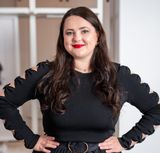

ChatGPT first, for everything — the lease, the oven, the recipes, the research. Claude now, for structured skills. Canva for design. Dr. Nikki Siso, a certified holistic health practitioner and the founder of Conscious Kitchen, a raw, organic, plant-based, gluten-free restaurant in Westlake Hills outside Austin, assembled all of it with no technical background. The results run from a $1,000 legal saving to a $30,000 mistake.
Every tool below was named by Siso on the record. Inclusion is reporting, not endorsement.
What did she use ChatGPT for?
Lease review, equipment sourcing, recipe development and ingredient science. In her words, "Everything I did was ChatGPT." Prompted to act as a commercial real estate agent, it read a 45-page commercial lease in three minutes, identified eight terms she should negotiate and drafted the letter to her landlord. An attorney reviewed that draft in ten minutes for free rather than charging her $1,000.
Prompted to act as an electrician, it returned three oven options with "the obvious one that was the best recommendation."
"It did a phenomenal job ... Easy, done. Didn't have to know anything about electricity or ovens."
Prompted to act as a herbologist, it generated functional drink formulations she and her mother then developed and tested. She also used it to understand how food preservatives work mechanistically, and had to push past the first answer: "It gave me this superficial answer. I was like: no, no, no, I want the science."
It failed her twice: recipe costing, where she wanted unit conversions from pounds to cups to teaspoons divided by yield — "I had one hell of a time getting it to actually fill in the spaces on the Excel chart" — and the permitting sequence that cost her $30,000.
Why Conscious Kitchen moved to Claude
Claude is Siso's current primary tool, used to build the structured skills behind her total toxic load assessment. Having started on ChatGPT, she says: "Now I [use] Claude."
"For my total toxic load assessment, I built out the skills in Claude. It started off as one skill and then it became way too deep. And I broke it out into eight different skills, now 15 — specific to what are the toxins in the home, what are the toxins in the food, what are the toxic thoughts that lead to dis-ease in the body."
Her reason for splitting it: "Each one of those had a bank of wisdom and knowledge and peer-reviewed studies that required a depth that one skill couldn't read through that much ... efficiently." One skill to eight to fifteen is an architecture decision a non-developer reached by hitting a limit, not by design.
What Market Sauce did before the restaurant opened
Market Sauce is a custom market research skill built by a friend, used to define Conscious Kitchen's target audience.
"I have a skill my friend developed called Market Sauce, and it is a deep dive into everything you need to know about your target audience. Who they actually are, what the size, how they want to be talked to, what are their biggest concerns."
She describes it as "a kind of chief marketing AI officer for you," and notes the research is available without it — "you can do it without this Market Sauce." Artificial Reality has not verified it as a commercially available product. Separately, she describes using AI extensively for market research without naming a tool, and it corrected an assumption that would have sunk the business: "Are they just raw vegans? Well, there are like four in Austin. We'd be out of business very quickly."
Canva, and the designer who beat it
Canva is her label design tool; she describes herself as "very well versed" with it. She produced a label she considered decent. A friend disagreed and connected her with a brand designer of thirty years, who normally charges $10,000 and did hers for $1,000.
"The AI generated a very template looking output. It wasn't elegant, high vibe, classy designer ... I don't know that AI has that skill yet. I think it really is running off template style formats."
The tool she did not buy
Recipe costing software, at around $150 a month, was ruled out on budget. She does not name the vendor.
"Now these things exist where you can pay software ... for a hundred and fifty dollars. You can use their software and it will calculate it for you. But it was $150 a month. On a tight budget, that adds up."
Also named in the conversation
- Gemini — Galina Fendikevich uses it to cross-reference restaurant nutritional guides against her blood work. Siso makes no assessment of it.
- Bobby Approved — a barcode-scanning app Fendikevich uses in grocery stores. Siso cites the same interaction pattern as the model for what she wants at a menu.
- Excel — where the recipe costing attempt broke down.
- Facebook Marketplace — not AI, but part of how the $85,000 build-out was held down: "finding chandeliers for $50 and driving to Dripping Springs to get them."
What to copy from this stack
Copy the prompt, not the tool list. Every success in Siso's account assigned the model a profession before the task — act like an electrician, act like a commercial real estate agent, act like a herbologist. Take the document you are about to pay a professional to read, ask the model to act as that professional and find what could hurt you, then hand the findings to the professional you were going to pay anyway.
Then check the failures before you plan around a tool. Costing arithmetic and permitting sequence both defeated the same model that read the lease.
Where this comes from
S1E6: I trusted AI to build my restaurant, it cost me $30,000 — the full interview with Dr. Nikki Siso. Listen or watch: YouTube, Spotify or Apple Podcasts.