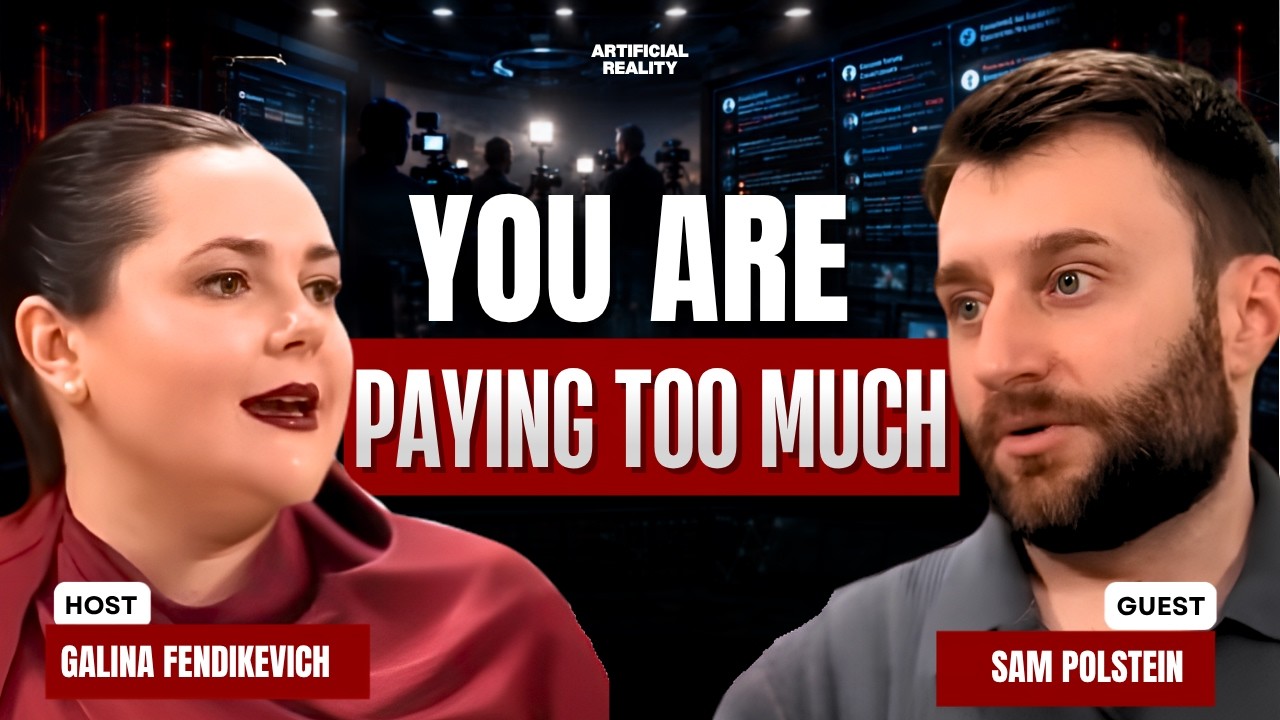
S1E4: He runs PR for deep tech startups
Sam Polstein on why he thinks about context engineering more than prompt engineering, and why every media database he has tried is three weeks out of date.

Listen instead: Spotify or Apple Podcasts.
Deep tech communications strategist Sam Polstein breaks down why anyone can now be an average PR person just by prompting ChatGPT, why AI still fails at building journalist media lists, and why nothing an LLM creates from scratch has any emotional resonance.
Sam Polstein leads communications and content for deep tech startups. He started his career running political campaigns across the Midwest and has worked on comms for everything from Fortune 500 companies to early-stage hardware startups building things like liquid metal circuit boards that rewire themselves.
What's working, what's broken, and what still needs to be built
- Sam runs his entire PR operation on Claude paired with Obsidian, storing all client strategy, call recordings, and writing standards as plain markdown files. If Claude gets worse or raises prices, he can switch LLMs overnight because the context belongs to him, not the model.
- AI is surprisingly bad at building journalist media lists. Despite being great at organizing public information, LLMs cannot do the tangential thinking required to predict what a reporter will write next. Sam's team still builds these lists manually because a 50% accurate media list can tank an entire campaign.
- Sam keeps a context folder literally called "good writing" filled with examples and a checklist of tropes to avoid. He makes Claude edit its own drafts against that folder before he even looks at the output.
- His top wish list item is a journalist intelligence tool he can debate with like a colleague. He wants to ask "Will this reporter cover my client's story?" and have it argue back with reasoning based on the reporter's last few articles and current beat, not six-month-old data.
- The PR job has fundamentally shifted. Sam no longer writes press releases sentence by sentence. He pulls insights from client conversations like an investigative reporter, and AI handles the drafting. The work is in finding the angle, not in choosing the words.
This episode is for you if
- You work in communications, PR, or content marketing for technical companies and want to see how a working AI workflow actually looks.
- You are a founder or business owner trying to figure out whether AI can replace your comms team or just make them faster.
- You are building AI tools and want to understand what PR professionals actually need that nobody has built yet.
Chapters
- 00:00 Welcome to Artificial Reality
- 00:50 Claude and obsidian: the two tools running a deep tech PR operation
- 02:04 Why 90% of your AI output is decided before you write the prompt
- 05:20 "I am no longer a writer." how AI changed what the PR job actually is
- 06:14 The checklist hack: making AI audit your own work
- 08:24 AI slop is real, but the bigger problem is lazy context
- 12:52 Why AI still cannot build a media list (and it should be able to)
- 18:01 From $20K social listening tools to custom dashboards built with zero code
- 19:30 "Everybody sounds the same now." the Claude tone problem
- 23:58 The emotion gap: why AI writing doesn't stick with people
- 27:23 The wish list: what a PR person actually needs built
- 32:24 NDA clients, defense tech, and the AI trust problem
- 35:12 How AI makes crisis comms faster than the 24-hour news cycle
- 38:59 "I want AI to be my thinking everywhere, not replace it"
- 41:41 Where to find sam polstein
Artificial Reality
- Every industry we have covered: AI across industries
- For business owners and execs: what operators actually run
- For AI founders and product teams: what your buyers are asking for
- Website: artificialrealitymedia.com
- In-person events: luma.com/artificialreality
Transcript
Full transcript
Galina Fendikevich · 00:00
Welcome to Artificial Reality, the reality behind AI adoption. I'm your host, Galina Fendikevich, and with me today I have Sam Polstein, who does communications and content for deep tech startups. Sam, welcome. Background
Sam Polstein · 00:12
Yeah, thanks, Galina. Thanks for having Tell me.
so I I started my career working in politics, working on political campaigns, moving around the Midwest, and that was how I I got introduced to communications and public relations. have worked for everything from Fortune 500 companies to where I'm focused now, which is with deep tech startups.
Galina Fendikevich · 00:31
Awesome. We are going to cover what works in AI for deep tech comms, ⁓ what's not working, and what could the industry build to help you be the best practitioner of what you do. Yeah. So let's start with what is working. What are some really good tools that are great in your processing?
Sam Polstein · 00:50
Yeah, 100%. I mean, I look, I think at the end of the day, the most important tool for us, I would say t two things are the most important tool for how we do business, which is Claude, you know, enterprise grade LLM that can help us from everything from diagnosing to taking a first crack at certain things. Really, you know, the way I think about it is AI is incredibly powerful for taking your thinking and your strategy and extrapolating that.
out and organizing it into different formats that can then be actioned into video content or into a press release in a PR campaign. So I there there's a lot that's working, but I would say Claude and then for me personally I love using Obsidian ⁓ as a way to
keep my my thoughts in one place and store them as markdown files, which are super easy for Claude to read and and Claude co-work can jump in and and when I direct at a certain folder, can see all the context for a given client, for a given process, you know, how we do things, some examples of good writing. You know, I would say at a high level that's how we approach approach AI use.
Galina Fendikevich · 01:57
How did you learn to talk to AI?
Sam Polstein · 02:00
Yeah, that's an interesting question. I mean, I think for me, you know, to top line, it's less about the instructions that I'm giving in the prompt. I think by the time the prompt has started
the the output is already 90% of the way there. Like it it it comes down, in my experience, to context. Like I think about context engineering a lot more than I think about prompt engineering, especially in my line of work, because there is so much context when you're talking about storytelling, especially in industries that are deeply technical, that have wealth of history, you know, approaches that have worked, that haven't worked, and where you're taking
something that's that's complex and explaining it and you know essentially pulling it out for a more high level, more lay audience. So giving it the right context and making sure that it's only searching the web and using the web and using its general knowledge sparingly and in the right context, like the right the the the right examples and for the right use cases. So I guess to answer your question, like how do I talk to AI
I mean, saying it another way, I'm kind of condescending, frankly. Like I'm very specific. definitely a micromanager in terms of I want you to look in this file and pull out this thing because this was where we talked about the strategy that I want you to focus on. and with that sort of guidance, I find it's it's it gives a really effective output.
Galina Fendikevich · 03:21
I mean you have to, especially with the state of generative AI today. You play that strategy layer and guide the AI, but it can do a lot of that initial work off the bat.
Sam Polstein · 03:33
Totally, totally. Yeah, that that's exactly right. I mean the bar to creating something is so low these days, right? my line of work, nothing we're creating, you know, we're we're working with companies that are building hardware and building hard things that AI can't produce. but the things that we're producing and selling to our clients, they can do themselves by plugging it into ChatGPT and they can do it now at like, I don't know, around the mean, like maybe around fifty percent.
they can be an average PR person. and so we have to be way, way better than that. But luckily with AI, it's easier to do that with less human resources.
Galina Fendikevich · 04:07
When you pull that information or do that strategy for a specific client, especially in a client interview process, you almost become an investigative reporter. So how does AI help you during this process?
Sam Polstein · 04:19
Yeah,
no no no, I think you're you're s you're sp that's a spot on insight. I think that it has shifted what the job of being a PR person is. I think up until r really in the past year or two, I would say, because the early iterations of ChatGPT were were not quite there from a writing perspective, but it's it's gotten much better. The L L Ms are like pretty good writers on their own. They're at least around the average. And so and you can make them make them better with context engineering.
But the job itself has changed. Like I am no longer a writer or thinking about each individual sentence and how to put those into a paragraph and the semantics of particular words. ⁓ I used to spend a lot of time on these sorts of things. And that has been not completely eliminated, but most of that has been removed because if I can give it high level strategy and find the insight, pull out the angle from a client conversation that's then recorded.
and transcribed and input into Claude via Obsidian, automatically like I have the I have the meat of what I'm talking about. Right. and so it it shifts the job. I'm I'm the work itself is no longer in drafting the press release. It's in pulling out the insights from the conversation with the client of what's interesting about their business and trying to suss it out like an investigative reporter would.
Galina Fendikevich · 05:36
Which you need to do because again for deep tech agencies it's very complex technology and you're the human that is simplifying.
Sam Polstein · 05:44
No, it's exactly right. I
mean, we're working with founders that are deeply ⁓ have deep expertise in a given subject matter. You know, their PhDs in a very specific area. And so for them, that's what they know and what's important to them. And our job often is to zoom out a bit and pull out the insights that matter for a broader audience. yeah.
Galina Fendikevich · 06:03
How do you use AI within the draft after it's been drafted to check itself?
Sam Polstein · 06:11
Yeah. ⁓ so I I think this is actually a very strong use in our in our toolbook. ⁓ you know, I think a lot of folks talk about the the first draft capabilities of Claude and of ChatGPT and that's that's great. AI tools are powerful for that for for that piece, as I mentioned, but they're also really powerful in checking yourself against a process that you've established. So if you use your you know, your human brain and your collaboration with your colleagues to develop a process, develop a checklist of how something should be done.
You know, this is this is the way we do things and the approach that we take, then you can, once you have an output and that's been spun through internal checks on the human level, you can put that into Claude and just make sure that we're checking our boxes and that that we're doing things the way that we said we were going to do things. And you'd be surprised how much, you know, you write something down and just because it's a process or it's outlined in your knowledge base, even if you've been working at a company for a long time.
You're not always gonna do it that way. so I think oftentimes the output comes back and you're like, ⁓ right, shoot, I should have thought of that. Like that's a that's a great point. Let me make sure that I'm doing this and including this piece. And if you give it enough context from client conversations, Claude will even be specific. It'll say, you know, your client Kyle said in the call recording on May eighth that he wanted this thing and this was really important to him. So Sam don't leave.
Leave that out. Like make sure you include that in this deliverable, or he's gonna be pissed. And that's that's an immense skill to have and and a a superpower when used like that. I know we'll get into it, but there's also there are lots of lazy ways to use Claude that can like again because the output you can create a deliverable so quickly and easy, ⁓ it becomes tempting to just
Put in the prompt, get the output, send it to the client, because you can send them something and it'll be halfway decent, but they don't pay us to be halfway decent. They pay us to be tremendously ⁓ solid at at PR, right?
Galina Fendikevich · 08:08
Yes, and that's the judgment that takes years and years of experience that comes in. For sure. And let's go into the where AI fails in PR work because you can use these LLMs who mass draft everything. It starts to sound the same and it's kind of weird.
Sam Polstein · 08:26
One hundred percent. I think there's a lot of talk in communications, in content marketing, about AI slop. ⁓ yes. And and I think honestly, I think while it's true, there is just so much more content out there because that bar has been lowered and it's really easy to get a content marketing campaign going. I I I think that we're not
often talking about some of the other downsides of of AI use. And I think the the kind of lazy being lazy with context is probably the worst one, right? If you don't because it takes work. I could just jump into ChatGPT or Claude now and ask it to create a deliverable for one of my clients without any project knowledge, without any of the knowledge, the markdown files that we've created and curated ⁓ over the years. and it would create something that's like, I don't know, fifty percent of the way there just basically.
based on searching the web about my client and then can figure out what they do. And that's tempting, but it's really the output is is mediocre. And that's where I think clients, especially the startup founders that we work with that are not averse to using AI, they're they're they use it in their own workflow.
Galina Fendikevich · 09:29
And they think they can do it. Why even hire a comms or PR agency?
Sam Polstein · 09:34
Exactly. And I
think people thought that about comms and PR before. I think often comms and PR is kinda denigrated in in the sense of well why why do I need like I know my story, I know how to tell my story. You know, I can hop on a podcast here and and talk about it. Why why do I need somebody to help me with that? And I think the answer is
You need the strategy. You need the why, right? You can create the content campaign, but if it doesn't ladder up to anything significant, if there isn't an underpinning strategy that is gonna drive your business forward, then why are you spending your time? Even if it's just a little bit of time prompting, you're just hurting your own reputation and people are seeing your content and thinking, that's total slop. But if it's laddering up to a strategy and to a campaign, then AI can be a really powerful.
powerful tool because it can basically be all your legs and all your limbs and and ⁓ appendages and they can all be working together in the same motion.
Galina Fendikevich · 10:29
I
found that to be true in my own experience working with PhDs who are insanely smart. They're incredible incredible people, but they're not storytellers. And storytellers are not PhDs either. It's the same thing with Claude Code, where everybody's saying, Why do we need engineers? I can just create this, and engineers are like, but there's a lot of bugs in maintenance and the best security is not in place and things are breaking.
Sam Polstein · 10:37
Totally.
Yeah, no,
that's ex that's exactly right. and I think like there as we know from our work, there are a ton of people building really crazy cool things, ⁓ which I could go into if we have the time, but like I
I think often they're so in the work and creating the thing that it's hard for them to even explain why it matters or why they're doing it because they've been doing it for so many years that that question passed them by years ago. So I think having fresh eyes and a fresh perspective and folks that can see how it relates to what others are doing and how it relates to the biggest picture Like next week I'll be going to a conference called Reindustrialize, which is focused on the reindustrialization of America, right? But there's many facts.
So like that could be everything anybody from you know, the big defense manufacturers or auto manufacturers who are using the factories to build the things that, you know
that that we want and that we need as a country, but it could also be the small startup that has found ⁓ and this is real, this is a company we're working with, the small startup that's found a way to change how the printed circuit board works and has created a circuit board that relies on liquid liquid metal to rewire itself and so it makes hardware prototyping incredibly easy. Cool.
Galina Fendikevich · 12:06
But you know Total. What does that mean?
Sam Polstein · 12:10
Exactly
right. Like I I founder is great, love him, and and I think he is in particular a very good storyteller and and maybe an exception to this rule. But like generally speaking, I think oftentimes folks get caught up in the the minutia the thing that they're building because they need to. That's how it gets done and how it get how it works. but why was I creating it to begin with is a question that they need help answering. yeah.
Galina Fendikevich · 12:32
One of the things that I wanted to ask you about that you actually asked to move from the what's working to the what's broken section that I yeah thought was really ⁓ fascinating, which is journalist research and beat matching. Yeah. Because AI is such a great aggregator of information, I thought that would be what's working.
Sam Polstein · 12:49
To
be honest, I'm disappointed that and maybe I could put this in the let's somebody please fix this and get some engineers working on on a better tool for this. I I find, at least in all the workflows that I've tried, that finding the so building a media list, right? If we take a step back, building a media list in comms is incredibly important. Who you're reaching out to is, you know, the same way context engineering is crucial to the output of using AI or using an
LLM, building a media list is the hard work that makes or breaks a PR campaign. Because if you're reaching the wrong people, it doesn't matter how good your pitch is. If it's off, you know, the amount of times over my career that I've gotten responses from journalists that are like, okay, fine, but I don't cover that. Or like, Ouch. Cool, but I my editor's not gonna let me talk about this. So you would think
LLM's really good at organizing all the information that exists in the public domain. Reporters have tons of content that they've written, both recently and not so recently. You would think that they would be very powerful. No, there would be super powerful tools and I wouldn't be manually or my team wouldn't be manually creating media lists. We find that's just not true. And and I think there's a few reasons for it. I think one, building a media list has a lot of tangential thinking involved. it's
It's a little bit more of an art than a science. It's like figuring out not what a journalist has covered before. Because often if they've already covered it, they'll be like, I don't I already wrote that story. Sorry, man. Like on to the next one. But you're trying to base, you know, the the vibe of their beat and what their editors are telling them to write, and then helping them with their next story that they've never written about usually.
Galina Fendikevich · 14:25
So how do you know what their next story is?
Sam Polstein · 14:27
It's it's they're they're you know, you can look for competitors, right? You can start with a competitive landscape. I think even better if it's not competitors but like kind of peer companies that are somewhat interesting in a similar vein but aren't directly competitive. It's a slightly adjacent or you know, maybe they both that's why I think it's important and helpful that we focus on deep tech and that we're we're able to work with a lot of companies that aren't necessarily competitive but kind of ladder up to a broader movement or a broader theme. So picking out those things in the reporting.
that they care about, that's usually pretty helpful in indicating where they're going next. Or just having a sense of like the different indicators. And for whatever reason, I find AI to be pretty bad at this.
Galina Fendikevich · 15:08
Which is surprising because
you sound very well versed in Claude too and Claude has a lot of capability.
Sam Polstein · 15:12
Yeah.
I I I I I think, you know, it's something we've been experimenting with and it's so important that it's something that if the output's bad, you know, we're we're gonna go back to a more manual process and it's something that's worth the effort on our side of getting right. and I think it's possible to get there. And and for a while I think part of it was Claude and ChatGPT had
kind of lagging information. They didn't always have the latest and greatest and the the from the internet and for media list building that's so crucial. Like I don't care what a reporter's written about six months ago for the most part. It's what are the last few stories and what are because I'm trying to guess what they're writing next. So what's top of mind for them and then what have they covered recently. If they've covered it really recently they might not want to cover it again, even if it's very relevant for them. Mm-hmm. And these sorts of things if there's a
three week long lag in the information that's feeding into Claude, well, that's basically useless.
Galina Fendikevich · 16:03
Yeah, that sounds like you're behind the curve already. Yeah. It sounds like there also needs to be a layer that's beyond the reporter's history, which is what is going on in the world. Yeah. In recent events that overlays with the exact topic of the report.
Sam Polstein · 16:19
Yeah, one hundred percent. And I'm you know, this this might exist already and I just haven't seen it, but yeah, I I think there there's definitely potential for a tool and maybe this is even an internal tool that we build, right? The the barrier to us building our own tools has I mean that's one of the exciting things about working in comms and that like there's a a
somebody I know who works at a a a VC but but does communications there recently who was like, I've become a a product manager. And I think that's totally true. Like we're we're c you know, with AI, you're able to kind of come up with your own products, whether it be like a a
social listening tool, although there's some limitations on what Cloud can bring from social ⁓ accounts, but like helpful analytics in terms of geo and and answer engine optimization and building dashboards for clients to keep track of their competitors and and and this kind of reporting that can be really, really helpful that used to be either very expensive and a huge part of agency overhead or didn't exist. and we're able to kind of create a custom solution for
our clients or for our workflows. So that's a very exciting part of Codex and Claude Code. But yeah, it does seem like for journalist list building and media list building, there's something there and maybe we'll get there with the right context. And you know, if we can explain this tangential thinking a little bit better to Claude, maybe it'll it'll become a little bit stronger. But so far the outputs have not been great there.
Galina Fendikevich · 17:38
Regarding the reporting, I worked with an agency called Accelity Marketing and the strategist did exactly that because he was so enabled with the tools. Yeah. Where he asked me, it was a personalized reporting dashboard. It's no longer whatever software fields are available. It's totally what do you need to see, Galina? And it can change
Sam Polstein · 17:58
my gosh. Yeah, one hundred percent. I remember at the start of my career, you know, when I started in communications and I was focused a little bit more on digital content, or back then even some folks recur r referred to it as new media, which I feel like is coming back a little bit, but I always thought that was funny. especially now looking back and it's kind of antiquated. But
the big powerful tools of the day, the Crimson Hexagons of the world. ⁓ I don't know if you remember this tool, but, you know, essentially a a big, powerful social listening tool that every agency was kind of hyping up and they were charging, you know, 20 K a year for access. And it's just like it's nuts to now have a custom you can build a custom solution with me having, you know, virtually no coding experience.
With Claude code it's nuts. It's really, really crazy. And it's just gonna get better.
Galina Fendikevich · 18:44
Yeah. And I
think an important distinction here is that you're using Claude code, but you're not trying to build big enterprise applications with it. It's just help here, help here, help here.
Sam Polstein · 18:56
Yeah, exactly. it's more about the making a pretty simple solution like building a dashboard, you know, it's pretty basic. Not don't need to be necessarily an advanced software engineer to figure that kind of thing out, but to make it custom and bespoke to your client and put exactly where you want where you like the information hierarchy and to do those things with a simple plain English prompt is incredibly powerful.
Galina Fendikevich · 19:20
Yes.
The other side of AI that you've noticed isn't quite working out as well as expected is the tone of voice. Can you tell me about that?
Sam Polstein · 19:30
Totally, totally. Everybody sounds the same now. and and there's like a Claude, Claude has a tone, it has a voice that that I think we're all coming to recognize.
Galina Fendikevich · 19:40
And I can tell
when it's Claude versus ChatGPT versus Gemini. It's so specific.
Sam Polstein · 19:46
Yeah, one hundred percent. And I think folks are picking up on it. So I mean look, th this is a big this is a big problem. I
Th this is our our solution to it is context engineering. Like I I think when most folks think about context and the context they're giving an LLM, they're thinking, ⁓ let me make sure that I have the calls that I've done with the client or information from their website, ⁓ you know, memos, decks, all the sorts of things that would come over to us in an initial asset transfer when we're we're getting up to speed on what our client does. You know, give us your pitch deck, ⁓ how are you talking about yourself?
technical white paper, any academic research. That's all great in super helpful context.
But there's an additional layer of context that we're building just internally on our own, which is one, how do you become a good writer, right? I've got a context folder on my computer that is just called good writing. And I fill it with things that both I think are good writing and also a list of tropes to avoid, things to to make sure that Claude is checking before it gives me anything. And you know, you can see in cowork that it's at the end of the day, it's created the output, but then it goes through the good writing if I ask it.
To in my initial prompt and just double checks that it has removed the Em-dashes, it's it's doing the things that I told it to just from a general it's editing its own work essentially. And that's helpful, but it doesn't remove that like Claude tone. Right. and for that, you know, I think you you really you have to define what the voice is for a given client, and you have to be, again, going back to your initial question, how do you talk to Claude, like
You have to be kind of condescending and be like, use this tone. Like make sure it sounds like this. And and defining that tone is a it's a context exercise. ⁓ but once you've built it for a client, then you don't necessarily have to have to rebuild it, right? It's it's something that you can do at the beginning and then you can use throughout all of the deliverables you're you're using Claude to create. so yeah, I I find that helps. That said though, it's this is a this is a broad problem.
And and I think it's something we'll just continue to to edit on. Another way that I would say is helpful, you know, if you're if what you're getting just isn't quite there. And also I would say, you know, goes without saying, but you never want to take even if the output is ninety percent of the way there, you never want to take what just comes from Claude and just spit it over to a client. It's it's there's always some things that need to be changed, right? And some things that your human instinct needs to add some emotion to, especially.
But
One thing you can also do is like rather than letting Claude build from scratch based on the context, is maybe take it a step further and provide an outline of the thing you're trying to do. And that's something that's quicker to create than if I was to write again every single sentence, but allows allows me to to heavily influence the voice and the tone so that it's coming across in my writing rather than Claude's writing.
And and I find that's also very, very helpful. Claude can can fill in some of the dots, but if I give it a strong headline, I find that that output is a lot better and it'll build more from the headline than it will from its own knowledge about how to write.
Galina Fendikevich · 22:49
You really have to give it instructions. I mean I've had a PR person just spit something out to me and it didn't even seem like they took one look at it and it was just wrong on all levels and they didn't seem like they did the prompt or context engineering and it can ruin a client relationship.
Sam Polstein · 23:07
100%, especially
when in comms and PR, again going back to what we were saying before, like the the client relationship is so tenuous to begin with because you're not doing something that's like they could do it themselves really quickly now with AI, or even before, you know, even in the earlier stages of my career, you know, clients are questioning whether they need a PR agency, whether they can't just do it on their own. That that's always an un like a thread through comms. So you have to make sure that the strategy
And the output is based off of your own human knowledge and experience. And the way I find you get there is through the context you build and the the you know the context you're giving Claude and then at the end you're refining and you're fine tuning based on what you know about the client and and also what you know about what resonates with the audience. This is something we haven't really talked about, but I think is a is a big piece of something that's broken with Claude from a communication standpoint.
Standpoint is my God, they have no emotion. There's like nothing they create from scratch is emotionally resonant resonant. Like they it doesn't stick with people. And that's basically our job. So yes, you can do you know, you could create that super average comms campaign, but if it's not resonating with anybody, it's just as bad as the the the campaign that didn't have any strategy behind it, right? it's
That at the end of the day is what we do and right now humans humans know emotion far better than
Galina Fendikevich · 24:30
Yes.
And it's not something you can put into a checklist because AI does really good with and you said you talked to in a condescending way. I don't think it's condescending. It just sounds direct. Yeah. And it's not like you're giving directions to a junior. It's no like AI.
Sam Polstein · 24:46
You don't know how I talk about. I I'm very mean.
Galina Fendikevich · 24:48
Well I did hear that if you're meaner to AI then it will produce better results.
Sam Polstein · 24:53
you what's funny, I was talking to a coworker a while back about that. And I I don't know, I don't know if it's totally if I found that totally to be true, but that definitely is a way of thinking. And I think at the end of the day, it's and I think what I mean in condescending, you know, if you read the prompts probably probably isn't, but it's it's directness, as you said. It's just you need to be specific. if you're if you're vague, it's not gonna pick up on the I mean it's the same way if you think about remote work versus in person. If I ask somebody, you know, a report of mine in person to do
Something, they're picking up on all my body language. And they know whether I'm Sam maybe like a little peeved about this. okay, I should really focus on this. And like they get that based on my emphasis. And same via Zoom as we do so often now, but maybe a little less so. Maybe it's a little watered down. It's little harder to pick up on body language. Well, Claude is basically that, even more so, right? It's further down the spectrum. It has no idea, it's just the words that I'm inputting. It's giving there's no metadata.
data to that prompt that's like, how does Sam actually feel about this? So being direct and talking to Claude in a way that I would never talk to a report because I care about that person's feelings and how they're receiving the information is is ⁓ can be done with Claude.
Galina Fendikevich · 26:04
And Claude is again any L LM just give it a checklist and it's really good with instructions, but you can't give it a checklist of human emotion. And sometimes I've noticed human emotion doesn't have enough statistical significance between two words for an AI to say this is a good output. Right.
Sam Polstein · 26:13
Yeah, totally.
Galina Fendikevich · 26:23
so if something might be frustrating but a human would use a completely different word that wouldn't show up in the model. Yep. And I find that a lot of the messaging work that I've done in AI, I talk to the end users of the product
And really get their raw, you know, feelings about it. And I remember this one interview I did and ⁓ this woman she was just talking about her work and she's like, you know, it's just it's all this document chaos and I'm like, that, that is the new slogan. This is what makes sense. And I don't think an LLM would put document and chaos in the same sentence.
Sam Polstein · 27:02
No,
I think that I think that's exactly right. I think that's an oxymoron for for any L LM ⁓ those two things always live in harmony. But yeah, that's funny.
Galina Fendikevich · 27:12
Yes.
So now that we talked about all the things that are not the best with AI, what needs to be built to make it really powerful for you as a communications practitioner to use?
Sam Polstein · 27:24
Yeah. I mean I think high level it it is
as powerful as the amount of work I put into it on the front end for building the context as we've already talked about. You know, building that library of good writing, building a library of how, you know, how I do things, how how me and the agency I work for have established this is the way that we approach a certain thing that we do all the time. building that context library and having that live in in co work and be easy to point Claude to and and
and be memory on the projects that that we're prompting. You know, that in and of itself is something that's ever evolving and that I kind of think of as building a tool in and of itself. How can I create a context folder that will make my Claude outputs better?
⁓ but I think from from some of the other things that are out there, you know, we talked about the relationship of the the the list building, the media list creation. I I do think there's that seems like something that should be within the grasp of of an LLM and and I think maybe it's that emotion piece that it's missing and it's not quite there yet. But I think there's gotta be a way to to add some some of that secret sauce that we have and
that we've created over our careers on the PR side and the comm side to to build something that will do that effectively and help do help us do that more quickly.
Galina Fendikevich · 28:43
building like
this tool for journalist intelligence is that almost each journalist has their own profile that is aggregated what's out there but what you know to be true from your own judgment.
Sam Polstein · 28:57
Yeah, one hundred one hundred percent. And I and I mean I think there are tools and platforms that we use like MuckRack and Cision that offer these sorts of th they are CRMs for exactly what we're describing and h you know have used all of them throughout my career. I think I think though that that sort of that sort of information, it's it's still it's not that easy to come by, still somewhat out of date, although less so than if I was just prompting Claude or ChatGPT.
So I think I think there's room for for a really powerful a powerful tool that I can prompt and just ask a simple question, you know, hey, what did you know, Ashley Vance at Core Memory, you know, do you think he'll cover this topic? And it can kind of argue with me as a coworker would. Because that's what we do. internally on Slack. I'm constantly going back and forth with the folks on my team of Do you think this person would be good? Well, they just wrote about this, so maybe not
But also they just moved to this outlet and there started this new beat and like we're having a back and forth and I would love a Claude that was as good or close to as good as like a PR person who has a few years of experience. And it's just not quite there in that in that task.
Galina Fendikevich · 30:02
It can't
debate with you effectively just yet.
Sam Polstein · 30:05
I know. Well
it also I I I mean I'm sure this has been covered ⁓ before in some of your other interviews, but but ⁓ it can be a little too effusive as well. And I want somebody who's gonna push back and tell me when I'm wrong. and not not
Galina Fendikevich · 30:16
Do
you know how many meta prompts I put ⁓ on my account level? Like in every chat of no, don't be overly positive.
Sam Polstein · 30:25
Honestly, that's that's one of the big reasons why I prefer Claude to ChatGPT is I find it just does that a little bit less.
Much appreciate that.
Galina Fendikevich · 30:32
well I'm a chat G PT girl.
Sam Polstein · 30:34
Hey,
no no harm fi you know, who whoever I mean, honestly one thing that I find is really important with the tools we use and this context setup that we have is I I I wanna make sure that the context is mine, it's not Claude's. And I think that's a really important cap like I keep it in Google Drive just to make sure it's backed up as I would any folder, but it's at the end of the day it's just a bunch of folders of markdown files, like plain text files of of thoughts and things that I have that I use Obsidian to read. But
This way, if Claude starts becoming really bad or raises their prices a ton, we can use another tool. Or if ChatGPT releases a new model that's just an incredible writer and we just have to use this new model, we can. And it's just a question of switching over and the switching costs don't become so great. Because I've talked to folks who have come into the agency and they've been like, well, I have really trained ChatGPT to it knows my writing, like it knows who I am, like it it's I've spent a lot of work and and they've put that work into ChatGPT.
And then it's hard to pull that out and bring it into another another service. But but that's what we have to do. so that's that's an important principle for us.
Galina Fendikevich · 31:36
Yeah, I I'm on that ⁓ I've tried Claude for a few things. No, I can prompt and everything, but I got my ChatGPT 2025 year in review or their 2025 wrapped and I am the top 0.1% of ChatGPT users. Love it. And just having that achievement, I can't I can't leave chat.
Sam Polstein · 31:40
Yeah, yeah, totally.
Look, I'm I'm right there with you. I love a good love a good achievement. you know, used to play the Apple Watch games with with fitness. You know, I I love getting that high score. but yeah, I I hear you one hundred percent. yeah.
Galina Fendikevich · 32:10
And you touched on something important too when it comes to privacy and access control. And it sounds like there isn't too much of that for comms right now.
Sam Polstein · 32:20
Yeah,
I mean it's this is a good question and this is a question we're getting from clients, right? ⁓ and I think this is a har you know, now that AI is so built into our workflows, as I've been explaining, and it and it should be, and I think like one, if you hire a PR agency and they say they're not using AI, either they're lying to you or they're charging you too much money. Right? like every in my opinion, everybody should be using AI if you're working in comms, it's just too powerful of a tool not to. ⁓ I mean that applies to many other professions as well.
But especially us. And I I think
You know, when it comes to to privacy though, it it's it's really important, right? ⁓ and there's a question of we've got all this this we sign NDAs with our clients and we've got information that we don't want to be used to train models and don't want to be in the public domain because it's incredibly important. even from from you know, we work work with defense tech companies, it's it's important from a a national security standpoint.
How do we have how do we give them that peace of mind that their information is not not being used to train the models or is publicly available? And so I think
I think th things are getting there and that's another reason I I think Claude has has pretty good safeguards and controls in that regard, but I think they need to do some work, some more work on building that trust. and I think that's really that's contingent to them or another ⁓ player in the enterprise AI space to to create that because it's a it's a must have, not a nice to have for the work we do. Mm-hmm.
Galina Fendikevich · 33:48
Yeah, and I see this message repeated just across the board, whether it's a Fortune 500 company that doesn't want to share their data. and I know the big LLMs, they're having enterprise and separate plans, but there's still a little bit of that gray area. And the last thing anybody wants to do is to self-host their models.
Sam Polstein · 34:08
no, no. Especially if you're a PR agency, like we it we don't want to deal with that. Yeah. That's I that's overhead you don't want to have and and you shouldn't have to have. so yeah, I I think that's a that's a really important point. And and and honestly, you know, maybe I say this because I'm a a comms and marketing person, but I think part of that is comms and marketing.
marketing, right? Like they have some work to do, the big AI companies, to make sure that that trust is built up with larger enterprises. and and that's something that they they need to do if they're gonna sell subscriptions and and and beef up that part of their business, which obviously they want to.
Galina Fendikevich · 34:42
Yes. Earlier in my career I worked at a crisis management firm. and that was I always liked sleep, on high alert, anxiety. Yeah, yeah. I likened it to scandal, Olivia Pope.
Sam Polstein · 34:48
did not sleep. ⁓
But ⁓
Galina Fendikevich · 34:59
At some point
I just got so jaded that I've been like, okay, I you know, crises don't even affect me anymore. Right. But with AI now, AI can help in crisis management.
Sam Polstein · 35:11
It really can,
yeah. I think and and maybe like broadening that out a bit, crisis management, but also there are all these things that are that that are our job to take advantage of that are reactive, that are positive. Maybe like something bad happens to a competitor or you know, whatever it might be, it's a news moment that that you know, Trump announces something that's incredibly relevant for one of our clients and we wanna jump in and make sure we're a part of that story. So it can be positive as well. But yeah, AI can be an incredibly powerful rapid response tool.
Again, because the barrier to creating something and getting something that's that's solid is much lower. and so we can do that much more quickly and we can take
a synthesis of what that moment is, whether it's the crisis, you know, have create that context pretty quickly and then you combine that with the context that's already ha it that the model already has that you've already built, you know, the output can be really, really strong and really, really fast in a way that is just not not was not possible before, right? You needed the twenty four hour turnaround or whatever it might be, even if you're working in a crisis environment and so and news cycles move so fast these days that
even, you know, waiting twenty-four hours to turn around something like that is make or break. I think I you know hm
Galina Fendikevich · 36:21
It sounds like a wish list item.
Sam Polstein · 36:24
I think this is something we kind of already have in like through our workflows. I don't know like I think it is something that Claude's very good at. I think that it's something that we're constantly fine-tuning, which is like how to do crisis comms well and through our experience we're building that context folder, if that makes sense. so I don't know if I would think about it as a tool in that regard, but but it's definitely it's definitely crucial and it's something that we continue to evolve.
So in that sense it is it's on the wish list and it's it's really, really important.
Galina Fendikevich · 36:56
If
there was one wish list tool that you could request that would just make your life so much better, you'd be happier.
Sam Polstein · 37:04
Man. What would it be?
Great question.
Galina Fendikevich · 37:07
Other than telepathy, I think we're still a ways off.
Sam Polstein · 37:10
Seriously.
yeah, yeah. I need a a a Claude to to to brief my clients and and be really complimentary. As complimentary of me as it is to myself, make sure it's spreading that to my clients. no, I I think that I mean I think the journalist relationship piece is is is definitely high on the wish list.
I think more more up to date information in the models, right? Like and I think maybe Gemini is a little bit better at this with like I was using Perplexity for a little while, found it to be a little stronger with like the things that I used to be using Google for and just want an extra level of AI abstraction on top of that and power on top of that. And I think that's just quite not quite built into Cloud, ⁓ and can be tough, especially in the world in which we operate with everything moving so fast.
so I think that that sort of get me up to speed in the morning piece. Like I still love sitting down and reading through the newsletters that I have in my inbox and and I think there is like a
There's a comms person ritual in that. You're having your coffee, you're catching up on the news, you're you're clicking on the articles you find that are interesting and thinking and, you know, responding to journalists and sending notes to folks that are relevant or flagging things for the team. But I think that I could be if I had a tool that was really powerful with really recent information and could also connect that to the context of my clients and flag the most relevant pieces for me, even if it's not in the newsletters that I read or
the outlets that are are my go-tos, that would be that would be great. That would be very helpful.
Galina Fendikevich · 38:42
I'm still trying to find a tool for that as well. And I sign up for a million newsletters to be honest because I know the information in there is great, but I can't read it all. So I need something that thinks like me to pick out the good stories.
Sam Polstein · 38:51
No, yeah, one hundred percent.
Yeah, yeah, yeah.
Yeah, exactly. Yeah, right. I think that that's you kind of hit the nail on the head of what I'm looking for always when I'm looking for AI tools, which is like I'm not looking for AI to replace my thinking, I'm looking for it to be my thinking everywhere. Like to extrapolate my thinking out to a bunch of different parts of the internet. And I think it's just too easy, especially if you'd not if you're not careful to
let it do its own thinking. And its own thinking is mediocre thinking, right? Because for the most part, I mean I know some AI researchers probably push back on this, but I I think in general, especially for the tasks that we're asking it to do and I'm asking it to do, like oftentimes if you're if you're if you're lazy and you just let it do its own thing, the result you get back is pretty mediocre. and so I want it to have that
emotional knowledge and emotional intelligence that I've developed as being a human being all these years. ⁓ but then also my experience and skills and expertise and and specifically the way that I think about things, right? In the same way that I would train a report to start thinking about things in the way that I think about things. You know, they still have their own level of autonomy. They're still their own person. but I want to impart
some of that way of going about things and strategy and thinking so that they can respond and that that's that's context and memory that they have and I find I'm often doing the same thing with with AI.
Galina Fendikevich · 40:22
I know you're a Claude person, but I noticed ChatGPT has been doing that on its own for me, where it started reiterating things or saying, I notice you think like XYZ and either I challenge you or along this line it's yeah, they're doing something funky.
Sam Polstein · 40:40
May maybe you're selling
me on open AI. Look, I I I'm I'm I'm here for the the highest bidder. Whoever has the best product and you know, the best compute and ⁓ is gonna get me the tools and output that I need, I'm gonna switch over to them. So yeah, that's good to know.
Galina Fendikevich · 40:55
Yes, ⁓ and the Claude limits are they break my heart when I reach that.
Sam Polstein · 40:59
Yeah. Yeah,
yeah, no, one hundred percent. we'll see what happens with ⁓ now that Fable is out and ⁓ was playing around a little bit with that yesterday. But yeah, the usage limits definitely come into play pretty quick. Yes. Luckily we're not doing a ton of he I mean, I think it often comes into play when we're doing like dashboard work and and oftentimes the both the context that we're asking Claude to read and the things we're asking it to do are lightweight from
AI inference perspective. like it's more here's all this word here's all these words, like make it something that's much more usable. which is better than create this this output and tool that's that's working. But but yeah, we still hit our limits. For sure. For sure.
Galina Fendikevich · 41:41
Well with that said, Sam, it thank you so much for your time. If somebody wanted to get in touch with you or work with you, what is the best way?
Sam Polstein · 41:44
Yeah, thank you, Glinda.
Yeah, for sure. I mean I think pro probably my LinkedIn ⁓ Sam Polstein and and the agency I work for is called House H A U S. we're a com's a creative shop that works with with deep tech startups. but my email is also sam dot polstein at deep tech dot agency. So send me a note. Cool. Sweet, thanks.
Galina Fendikevich · 42:06
Sounds great. Thank you, Sam. Cool.