S1E7: How a non-tech founder built a 15-agent AI health business on Claude
Dr. Nikki Siso built fifteen interconnected Claude skills with no technical background, cutting client intake from hours to 45 minutes and a 10-page report.

Listen instead: Spotify or Apple Podcasts.
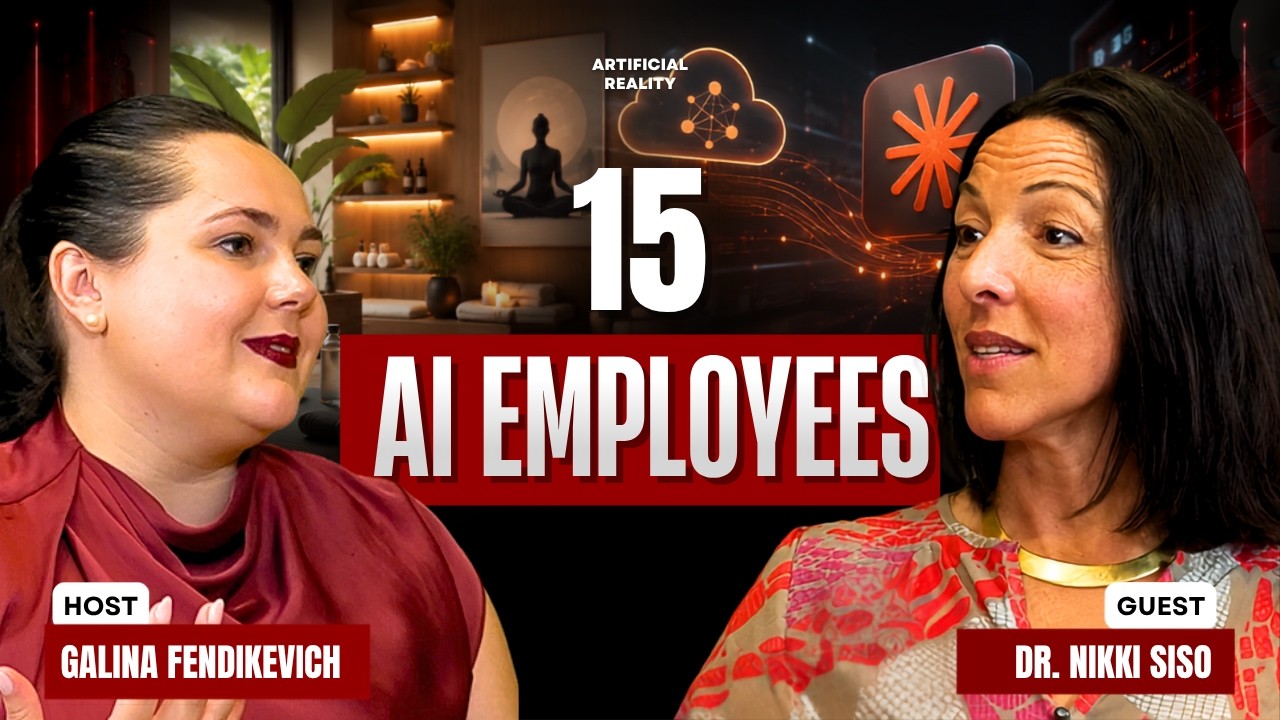
Holistic health practitioner Dr. Nikki Siso breaks down how she built 15 interconnected Claude skills that cut client intake from hours to 45 minutes with a 10-page report, why she banned all FDA and EPA-approved sources from her AI because the agency let companies self-certify 86,000 chemicals, and how her assessment reached the root of a client's lifelong belief in 3 questions after years of therapy never got there.
Dr. Nikki Siso is a certified holistic health practitioner and the founder of Conscious Kitchen, a raw, organic, plant-based restaurant in Westlake Hills, Austin, Texas. She developed Type 1 diabetes at 29 despite being vegan since 15, which launched a quest through a Harvard master's in sustainability, a PhD in holistic health, shamanic practices, and every biohacking tool she could find. She now runs TOX, a total toxic load assessment powered by Claude that evaluates toxins across your body, home, food, and mindset.
What's working, what's broken, and what still needs to be built
- Nikki's TOX assessment walks clients through 15 body systems, then hunts through their bathroom, kitchen, and thought patterns for toxins. It generates a 10-page report in minutes. Before AI, the same process took hours per client and was never as thorough.
- She trained Claude across 15 disciplines, from functional toxicology to polyvagal theory to trauma-informed coaching, and directed it where not to look. No FDA, EPA, or pharmaceutical-approved sources. The EPA approved 86,000 chemicals by letting companies self-certify their own safety.
- A client who worked with therapists for years said the TOX assessment reached the root of her lifelong belief system in just 3 questions. The AI is trained on top therapeutic modalities from around the world.
- The assessment took hundreds of hours to build. The 10-page report crashed the chat because it exceeded token limits. The team had to move report generation to the backend and deliver it by email.
- Nikki wants real-time voice conversations in her cloned voice so clients can walk through their home while talking to the assessment. The current 5-8 second delay makes the experience too jerky to use.
This episode is for you if
- You're a health practitioner, coach, or wellness professional looking to scale your practice without losing your personal approach.
- You're a business owner curious about what it actually takes to build an AI-powered product from scratch.
- You're building AI tools for practitioners and want to hear what's missing in deployment, voice, and backend orchestration.
Chapters
- 00:00 Highlights
- 01:20 Welcome to Artificial Reality
- 01:52 What is holistic health coaching? The 360 approach
- 03:54 Type 1 diabetes at 29 while vegan since 15
- 06:13 The glass cup: how your body's toxic load overflows
- 07:26 From a Harvard master's to shamans and breathwork
- 10:28 What happened when wim hof led a room through breathwork
- 13:07 "I became the health coach I always dreamed of. Because of AI."
- 15:03 Why she banned FDA, EPA, and pharma sources from her AI
- 16:28 Detective TOX: the toxic load assessment built on Claude
- 18:50 Before AI: hours per client and never thorough enough
- 20:08 Training AI to be compassionate but direct
- 23:12 Hundreds of hours to build. Not one prompt job done.
- 25:19 Your dental floss might contain forever chemicals
- 25:49 From one skill to 15 and the conductor that runs them
- 27:03 Self-checking AI: "Pretend you're 5 difficult clients"
- 28:43 Claude wrote the instructions. Why can't it build the app?
- 30:10 Working like 10 people but actually working harder
- 33:40 The voice problem: 5-8 seconds of delay kills the experience
- 38:53 Why accountability still needs a human in the chain
- 41:19 The wearable that knows when you need to breathe
- 44:46 Calming the nervous system in a world that won't let you
- 46:25 AI doesn't take jobs. It takes the jobs you hated.
- 48:02 Where to take the TOX assessment
Artificial Reality
- Every industry we have covered: AI across industries
- For business owners and execs: what operators actually run
- For AI founders and product teams: what your buyers are asking for
- Website: artificialrealitymedia.com
- In-person events: luma.com/artificialreality
Transcript
Full transcript
Galina Fendikevich · 01:19
Welcome to Artificial Reality, the reality behind AI adoption. I'm your host, Galina Fendikevich. With me today, I have Dr. Nikki Siso, who is a certified holistic health practitioner. She will be sharing about health and wellness coaching as well as her total toxic load assessment. Nailed it. Yes. Welcome, Nikki.
Dr. Nikki Siso · 01:40
Hi, thank you so much for having me, Galina. It's such a pleasure to be here with you.
Galina Fendikevich · 01:44
What is holistic health coaching? Can you walk us through your process and how you got here?
Dr. Nikki Siso · 01:52
So with holistic health, we take a it's a holistic meaning we we look at all the different parts of the body. So we don't just look at what the person's consuming, but also what they're breathing, what they're consuming from like media standpoint, what there might be stressed at work. We look at how much they're getting in nature, if they feel supported by their friends and their loved ones, if they're on living on purpose, like we we take a holistic approach.
to someone's well-being.
We don't just look at one small avenue like food, even though what goes into your mouth and and you consume is has the probably the one of the bigger impacts on your body. but maybe what you're thinking also impacts the body, right? Because if you're stressed and you're you have a even a perfectionist tape, or like I I'm only lovable if I achieve, then you you have a heightened level of cortisol throughout the day, which causes inflammation, which then might cause you to do some coping mechanisms like unhealthy food.
foods or alcohol or different numbing agents that will you're attempting to get back down to baseline, but those actually trigger and spike more cortisol responses. So it very important to look at the holistic of take a holistic approach when it comes to looking at someone's health.
Galina Fendikevich · 03:13
That's so true. It is really an entire ecosystem. Correct. And I do notice for me, I tend to have high cortisol because I'm always a founder. I'm in high stress industries, whether that was finance or blockchain and now AI. Yeah. And I do notice, especially whether I am in an environment where let's say I have a meeting and I'm in a building with no windows, how that impacts me in my high stress job with
what I just ate to produce w either a high performance or a low performance. So I really like this 360 view that you have. How did you get into it?
Dr. Nikki Siso · 03:53
So this has been a long personal journey with health. I developed type one diabetes at 29 years old, which is rare. Normally that's a condition that someone experiences at four years old or much, much much younger. but I had actually, when I dove into the research, I found out that I had the eight causes that are known to cause type one or trigger type one responses in the body. But the more I did research, the more I realized that the body we we we diagnose people.
But that's diagnosing the symptom. It's not understanding what the root causes. What caused the body to express this new way of being, right? When it's tired or it doesn't have to be an official diagnosis like cancer or diabetes or heart disease, right? It can be you're exhausted, you've gained weight, you're you're
Brain isn't functioning, you're searching for words all of a sudden, right? The body will give us smaller signals. And it's usually when we don't pay attention to those, we end up with a full-blown diagnosis. But no matter where you are on that spectrum, the opportunity is to look at, okay, what's causing that? And so I went on a quest. I was like, what is how can it be? I I've been vegan since I was 15. I'm now 29 with type 1 diabetes.
Galina Fendikevich · 05:13
That doesn't make sense.
Dr. Nikki Siso · 05:14
Right? It didn't make sense at all. But when I did some digging, well, I had a super hypercritical mother. She loved me like crazy, but hypercritical. And she liked things done her way. I took it personally. I thought my inner dialogue was I can't get anything right. right. And so that with that subconscious programming
Every time I did something and I ran that tape, or I called my mother and I she I'm sharing something I'm excited about and she pointed out how you know her fear tape ran and pointed something out that I was I wasn't doing right or how I should do it her way. I immediately went to alcohol or marijuana or some kind of food that was cookie, right? And and so this is how the body plays together. This is how these these
I it was described to me this way, and it really helped me. Imagine what a body can tolerate is a glass cup, right? And if the
If your body has already got adverse childhood experiences, right? You had somehow an abusive child, a parent, or somehow an abusive situation in your childhood, it doesn't even have to be physical abuse, it can be mental abuse as well. But that fills your cup halfway because you're now already operating at an elevated cortisol state. Then you add alcohol use, then you add
Mold exposure, then you add antibiotics, then you add all the stuff in the our food system right now with the preservatives and all the chemicals and additives that are in there. Then on top of that, you're at a stressful job, right? Your body will break, it will the couple overflow at the your g then your genetics play a role. It will break at the weakest link.
Dr. Nikki Siso · 07:02
So for me it was my pancreas. And because it's an autoimmune condition, my my inner inner, it's like my inside my head was attacking myself. So my body starts attacking itself.
Galina Fendikevich · 07:14
It's so funny how that body-brain connection is tightly coupled and w we always see it as completely separately. No. But it really starts up here.
Dr. Nikki Siso · 07:25
Correct, correct. And so that led me on a path. I wanted to know everything I could understand about the body. I got a earned a master's in sustainability at Harvard. I wanted to understand what were the toxins that were coming into our environment and how they were causing disease in the body. I then studied a PhD in holistic health and nutrition. My mom and I actually did that together. So we have that background, really understanding how the body operates, what's
we studied peak performance was our specialty. So what will support the body in operating in peak performance mode so that you're fully optimized and you get all the nutrients and the vitamins and the the life force that food should give you. That's why we advocate raw food at at our conscious kitchen is because it's full of life force. if you think of a leaf of spinach, if you hold it up raw, it can stand there all vibrant. What happens when you cook it? Right?
It wilts. And that's the life force is going. And a lot of the nutrients and so the the value, the f the spark of life, we we we try and pres we do our best to preserve. And that's how we like to eat now. but I also sat with shamans around the world to get into the subconscious mind and really understand what's governing what are those stories, what are those beliefs, where do they start? That's what a lot of plant medicine will support with, but breath work as well can do that.
holotropic breath work and do the psycho psychosomatic work that you need to get the stuck energy that's in your body up and out of your system. And then all of a sudden you're just lighter and clearer and you don't have these like reactions. I was reacting to my mother and it upset me so much that I would I meet her with anger instead of with love and kindness and patience. And so that became my quest of like okay how do I control these reactions?
So that I'm not turning to the coping mechanisms and I'm not turning to anger reactively, and I have no control, and then I'm mad at myself, and then I'm in a shame spiral, and then I'm eating because I feel ashamed, right? Like, so really managing the the thoughts was very important to me. And I so breath work, sh shaman work, and then I tried every biohacking tool, newest I I wore the goggles, the meditation, the tracks, the b- the
Dr. Nikki Siso · 09:48
The, you know, the you lay on these beds with the vibrate and the with sound and everything, every single thing I could get my hands on because I knew I was capable of more and I knew I was capable of calming my nervous system. That's the trick. It's calming the nervous system, learning how to do that, and then really hearing these stories and choosing a different one.
Galina Fendikevich · 09:52
You really tried everything.
Dr. Nikki Siso · 10:11
But if you're not, if you if you're captured, if you're still living in the story, it's very hard you to control the reaction. There's no pause, right? You want that pause to then make a different choice, but there's no pause when when you're in that reaction state.
Galina Fendikevich · 10:26
Right. I did
some breath work. I had a fabulous experience and I've never been a breathwork person. I'm part of a community called Summit and they have these flagship events. A couple years ago now I went to Summit Baja in Mexico and it was so beautiful. We stayed out of Marriott there. And there was a session led by Wim Hof. Yeah. And Wim Hof led the entire auditorium through a breath work practice. Wonderful. And I was astounded at how long I could even hold my breath because
Dr. Nikki Siso · 10:53
Okay.
Galina Fendikevich · 10:58
I always saw myself as a shallow breather, and I can't hold my breath for too long. But through his breath work practice, I was able to hold my breath. I think it was for two minutes or four minutes, he challenged everyone, and I actually did it. I never thought it was possible. But how I felt after coming out of the session, my gosh, I just I felt light as a feather. I felt like the world opened up. I mean, as a high achiever, high performer, I feel bogged down on a daily basis with the weight of decisions.
And with the weight of the world and trying to consistently keep my high achiever, high performer status. But after that session, I just I felt so light. I felt like I could just be me and whether that's the self-love coming in and not listen to the criticism of the world or be too harsh of myself. That breath work really impacted other areas of my life. And I realized how much I needed to.
Be mindful of more holistic practices or take that 360 view of my life. And it sounds like when people come to you, something broke inside of them and they realize that they need help, something needs to change, they need help identifying exactly what it is, whether that is diet or mental or the stories they've been telling about themselves, and you help guide them through an assessment to determine what are the factors leading to this breakage and how they can resolve.
those factors to come out the other end in a holistic, healthier way.
Dr. Nikki Siso · 12:32
There correct, exactly. Yeah, perfect.
Galina Fendikevich · 12:35
And
What is intriguing is with John AI now, you have found a way to implement AI in the work that you do to become a better coach to your clients as well, to be able to even have capacity to handle more clients. I'd love to learn what worked in using AI for your practice, what hasn't worked the best, and what you think engineers in Silicon Valley could build to help enable you to serve your clients better.
Dr. Nikki Siso · 13:06
I have literally become the health coach that I've always dreamed of becoming because of AI. Because I now have access and the capacity to remember.
Galina Fendikevich · 13:12
Because of AI.
Dr. Nikki Siso · 13:21
a breadth of knowledge that I I c I I have now have access to peer-reviewed studies that came out of Japan and Sweden. And I have access to agents now that I've built out that are trained in functional toxicology.
I I studied at Harvard, right? my sustainability was from Harvard. I couldn't remember all of the eighty six thousand chemicals that the APA has approved and how they each one of them affect the body. It's a crazy amount. And
So there's no way one human could know all of the facts, even in one discipline. I now have access and actual access to knowledge from f across fifteen dis different different disciplines that I now know work because I've tested them on my own body.
Right, so I brought in the functional toxicology, the integrative neurology, the IFS parts work, the trained trauma-informed coaching is a skill. I I've brought in the it it it's it the polyvagal theory, like all of these different theories that if you
were to specialize in one like cognitive behavior therapy, that's psychology training for decade, like nine years of studying, right? To really fully understand, to really understand, to have read every single peer-reviewed studied out there. AI can do that in minutes. And then I can train, I've trained a skill to be really dialed in each one of these modalities.
Dr. Nikki Siso · 15:04
And then I directed as well where not to look. So it's not allowed to pull from anything the EFDA, the EPA, or any pharmaceutical companies have approved. It's not allowed because I don't want anything that's had a vested interest in getting past. Right? The EPA approved 86,000 chemicals. How? They didn't have the manpower to test all of those chemicals. They put the onus on the company.
To do the job of testing these chemicals and say that they're safe.
Galina Fendikevich · 15:37
So the incentives are misaligned there. It sounds like you have a philosophy and you have a whole belief system around holistic health with the infinite knowledge that is produced in the world, the infinite studies in other languages. What Claude, since you mentioned scale, Claude allows you to do is search for these specific studies, not everything, given your philosophy, given how you like to consider.
Health coaching, you pick the information, you direct Claude, which has everything, but you don't want everything. You don't want FDA EPA, and you say, This is my program, this is what I believe in. This is my judgment, and consolidate these specific pieces of information for me to use for my clients.
Dr. Nikki Siso · 16:27
Correct, correct. So I've developed a toxic load assessment. I call it TOX. it is I call it detective tox because it will take the person first through their health assessment. It goes through 15 different systems in the body and finds out exactly how the person's sleeping and their hormones and all the different effects on the body. And then we get a really clear read on where the person is physically and emotionally in that moment.
And then it will take them on a hunt through their home for the toxins in their home. So you'll actually be directed to your bathroom, take pictures or you can type out your beauty products.
And it will tell you what's in those beauty products that are might like this one's excellent or this one's really poor. And it's this is why it's leading to the thyroid condition, right? It will correlate based on these studies that I've researched. And then it will take you through your your kitchen and your where you like to eat, and then into your mind and actually ask you questions based on some might trigger some childhood beliefs or or uncover some childhood beliefs that were formed that create this now cast cortisol.
Cuscascade. So this has and the best part about all of it is that it will make connect all the dots. So not only are you rubbing your hair with phthalates in your shampoo and lathering parabens on your face and and your lotion and maybe eating seed oils at the restaurant that you love, but you're also running this perfectionist tape or this achiever tape, right? And so these all
build in right to this glass and you overflow. And that's why you come to us and you're like, I feel depleted. I'm exhausted. My brain's not working. Like I I need I need to I I I know I'm capable of more.
Galina Fendikevich · 18:21
Because of Clot, you created this thorough assessment. Correct. Using AI under the hood with certain studies and areas that you've curated AI to focus on, help people do this assessment, help your clients on their own through a nice UI, through a chat experience. What did the intake process look like before AI when you were doing this one-on-one with clients?
Dr. Nikki Siso · 18:50
Before AI, it was taking me hours to go through with each client. It would never be as thorough as what it is now. it actually, I think because there was a humor, a human element, maybe there's a little bit of a fear of judgment, of really sharing what is happening. Like there you some clients would keep things a little bit more secretive.
Also the the ability to really clearly know the root causes and identify them within forty-five minutes, no way before. No way. This this now moves way faster. It saves me hours of work.
Galina Fendikevich · 19:32
That's amazing where you can focus on either conscious kitchen at your restaurant or reading the results and working with the client on the result of the report versus the very manual and drudgery of like the first intake in the questionnaire.
Dr. Nikki Siso · 19:47
Yeah, exactly. Yeah. And then now it's so quick. They get a report within minutes of the completing the assessment, 10-page report explaining exactly what low-hanging fruit they can work on right away. the and the tools are just it's it's shocking how well AI worked for this because I I had to train it, first of all, to really be compassionate.
Which is an interesting concept, right? To train artificial intelligence to be compassionate. But it it's trained to be very pleaser naturally, or because they want you to stay on the AI tool. so you I had to train it to be more direct, but also be gentle. Like so there's a
we don't want to just call someone out on you're doing this wrong, this wrong, this wrong, this wrong. It's overwhelming. So I I've trained it to point out what the person's doing right, what is actually working. And then with a little bit of padding, they can receive okay, this needs to be addressed.
Galina Fendikevich · 20:51
Yes, it's so funny because receiving feedback is hard no matter who you are, first of all. And it does require a certain tenacity when you deliver that feedback. And AI requires that tone training. It was in a previous episode when I was talking to a public relations specialist in deep tech, and he really was focused on the exact tone and voice when he's communicating deep tech.
to the public, which is very different than how engineers talk about the technology. And in the same way is you don't want to overload. So taking this general purpose model, no matter what industry you're in, there requires like this finagling to make sure that it talks to a human, depending on who the listener is, in a s in a
very specific way so that the output is received in in the best way possible. And you've been able to do that and it it sounds like you also walk through the report with your clients to add to the padding but also have that you know AI making everybody
happy with the results. I mean it tells you what you want to hear, but taking that a little step back of here some of the things that you need to fix. So you're almost a translator with the AI yourself.
Dr. Nikki Siso · 22:12
Yeah, and I can go deeper where people don't want to go with a chatbot per se. Right? and there it's it's I trained it also, like don't push. If if someone doesn't want to answer a question, don't push, just flag it in my report. And then if I think it's necessary, we'll go deeper there.
Galina Fendikevich · 22:31
Mm-hmm. It's incredible that Claude enabled you to do this on your own, although I do know that you hired some help to to sew all these pieces together, whether it's what the client actually uses and Claude under the hood. Where did AI create moments of frustration for you where it was not just, you know, one prompt job done, which is the ads I've been seeing?
On New York City subways by a certain AI company. I've seen it a hundred times and it always says one prompt job done, and that's never the case in AI. No.
Dr. Nikki Siso · 23:12
No, not at all. This took me hours, out hundreds of hours to put together. and and yeah, no, there's no way. because even with the research, right, the finding all the different studies and then adjusting them and then making sure that when I say adjusting, meaning selecting what you what needs to be in there and then adjusting the tone and then adjusting the languaging because it would come out as this.
long bulk text chat bot and it's too much to read and I had to shorten that and then it got too short and then right it it it's it's a continuous continuous stream of fixes and then that's not even to get into the once you actually create a user experience with a developer. Now we've got a whole series of bugs it would stop midway and just stop and we're like what happened.
Galina Fendikevich · 24:06
W that's not a good no user experience at all.
Dr. Nikki Siso · 24:09
w apparently we ran out of tokens. We gotta consider that into the mind, right? Or like it just wouldn't send the email at the end with the report. or it just wouldn't
Because the report is 10 pages long. Well, I just figured out that it was too much to put as a final response in the chat. It needs to be taken off the chat and done on the back end and then sent as an email. Right now we had it going as the final thing that gets submitted on the chat, but it's too big of a bulk. It was too big of an ask, right?
Cause it was not only the report, but also I get a four my eyes only. I've trained it to write a report for me of what this person really needs and supports me as well. and also a JSON. So it it had three instructions at the end and then it would just freeze. And then it was freaky, because we thought this person just took 45 minutes to go through this full assessment and where's the report?
Galina Fendikevich · 25:04
be so mad if I spent four to five minutes and got nothing.
Dr. Nikki Siso · 25:07
Right. I mean, you're taught throughout the whole report. You're you're learning it's an education, it will tell you, okay, you this is what's in your mascara. You know, you didn't know. I I thought I was all organic, right? I I'm good. I went through it and it told me about oral B has PFAS, forever chemicals in my floss. I had no idea. So multiple times a day, I am smacking my gums, the most sensitive tissue absorbing tissue in my body, with forever chemicals.
Galina Fendikevich · 25:35
Wow. What that's dangerous. It's crazy.
Dr. Nikki Siso · 25:38
Crazy. We're bombarded by toxicity and it's really important to find out where it is. And that's why TOX is designed to and that's why I have separate skills for each one of these. I originally had it all as one skill, it was too much, because the reference banks each have like 17 plus documents in them alone with the peer-reviewed studies and all the different knowledge.
So I had to break it up into three different now it's 15 different skills. There's a nervous system regulator, there's a there's not only the toxins in the home, toxins in the food, toxins in the mind. Like the it's a full, full, full complex program that all talks to each other, right? There's a conductor that like first sends the sends the it introduces talks and then sends you to the assessor, the health assessor. And then the health assessor sends it back to the conductor.
Now the conductor sends it to the all right, let's go on a hunt through your house based on what the assessment came back with. Right. And then that comes back, and then we go to the food. So it's like this constant back and forth through multiple different skills. All of that had to be built out on the back end. I didn't know how do that. And it's not an obvious user-friendly system that I have seen. potentially, I'm gonna at the end of the month I go to see a two-day workshop for chip.
That might be able to put all of this together without a developer and it tests itself. That's the one thing that's also missing, testing itself. So you can tell right now, you can tell Claude, hey, pretend like you're a user and go through and test this chatbot. And on Claude, on the back end, it will go through and do a whole runs and, like, yeah, got stuck here. Let me fix the code. Let me fix the code. Does great job.
Galina Fendikevich · 27:22
So you don't have to sit there and do it.
Dr. Nikki Siso · 27:25
Once I figured that, I was like, And so I was doing it on my end, because otherwise I was finding a bug, but my developer had to fix it. And now I could do it my own myself. But I couldn't fix what he set up. I couldn't fix if it the conductor and the health assessor weren't talking together. That was on the back end. I could only fix the skills.
Galina Fendikevich · 27:47
I see. Yeah. Yeah. So
Dr. Nikki Siso · 27:49
So, but that's a really cool trick, by the way, just so you know. Like pretend like your five, I told her, I was like, pretend like you're five very difficult clients. Don't answer this like fruitfully. Answer like almost like not want to answer or give like half answers or right, like just be difficult. And it did. It ran through five different types of clients that could come to with all sorts of different health conditions, and we it found the bugs.
Galina Fendikevich · 27:53
Self checking AI. Yeah.
Dr. Nikki Siso · 28:16
So that was great, but the back end could still be way easier.
Galina Fendikevich · 28:20
It sounds like it and someone like you who is non-technical but you're a practitioner in a very specific vertical when it comes to holistic health, you don't necessarily want to take the time to do all the hooking things up in the back end, but you have the instructions of what you need and what you want the system to do, how it operates, and the output.
Dr. Nikki Siso · 28:43
Claude gave me the instructions. I handed the instructions to the developer. If I can get the step-by-step instructions from Claude, why can't I just hand this to a model and say build it?
Galina Fendikevich · 28:56
Yes, you gave yourself instructions, LLM. Now go do it. Do it.
Dr. Nikki Siso · 29:00
Why am I why is there a person involved and he's the one like not that he's making mistakes, but like, you know, now there's a human element. Humans make more mistakes than computers.
Galina Fendikevich · 29:09
Yes, it it's so funny. I mean, this is the state of technology and AI as well. When there are all these claims of AGI and AI taking over people's work, including software engineer engineering and all of this, it makes me laugh because there are still some very hard tactical, technical things that AI is just simply in uncapable of and still requires engineer engineering help to accomplish that, similar to how Amazon, AWS things
They laid off 30,000 software engineers because they had coding AI and they're like, okay, we don't need you anymore. Amazon went down for a few days a couple of times and they ended up hiring engineers back. Like it still takes some help to get the AI like really working end-to-end the way it's supposed to. Again, not one prompt job done.
Dr. Nikki Siso · 30:03
No, not one prompt done. that's hard to say. What one prompt job done. Job done. No. and I think it's a lost opportunity because I'm now working like 10 people, but I'm actually doing more. I'm working harder now that I've had AI. Because I the power of it is so fascinating and so like addictive that I I can create all the things that before weren't.
possible for me or would have needed a much larger budget or a team of 10, right? So now I can actually do all these ideas that I have in my head. But now I'm working on all of them and it it takes it does still take hours to put together. My mother thinks it's like this one one prompt job done thing. And I'm no.
Galina Fendikevich · 30:53
No, it's multiple iterations. Yeah. And then it doesn't give you the full information. You still have to say, wait, that doesn't sound right. What about this? Right. I it is a lot of work. To your point, I mean, there are days and days where I just don't even leave my apartment at all because I'm away t talking to AI, building my business and all this stuff. And I'm like, I want to do more. Now I can do this. Now we can do this. Yeah. And it's just I end up working so much more, so much harder and reading through all those long outputs.
From AI. They're long. They're long.
Dr. Nikki Siso · 31:28
Yeah, they're really long. Yes. But it's it's so fun though. I
Galina Fendikevich · 31:34
It is a lot of fun.
Dr. Nikki Siso · 31:35
It's an obsession. I and I'll I'll full on it on it, but I'm I'm fine with it. It's the I I love the the capabilities. I love being able to produce and and create such high level and things that were unimaginable before. Like the number of people I can help now with having an assessment, right? That gives them a full report on how to help detoxify their whole life. Like, imagine the
Impact I can have going from one on one to now a billion people can take talks.
What happens when a billion people take this test to this assessment, detoxify their life, they start choosing products that aren't harming their their own body, that has a ripple effect on the environment. Now 150 billion bottles of plastic aren't going out into the rivers and the oceans and they're right. A hundred it's it's staggering the numbers that can be impacted. like I think it's it talks said if we reach a billion people.
Right. I put it in there because why not? it said it would take off like 500 billion or tons of pesticides, like some crazy unfathomable number, right? Of like we're polluting this planet. And when we start detoxing our ourselves, we can we naturally detox the planet.
Galina Fendikevich · 33:03
That's so beautiful. I mean, knowledge is power. And you're able to scale your philosophy in your knowledge through something like this as an assessment without everyone having to go to Claude and saying how can we reduce pesticides in the world? It just goes through how do we make ourselves healthier. Right. And then it has all of these unknown impacts, which can be so positive.
Dr. Nikki Siso · 33:27
Exactly. Yeah.
Galina Fendikevich · 33:30
With that said, what can Silicon Valley do to build capabilities or technology to enable you to be a better coach?
Dr. Nikki Siso · 33:39
I would love if AI could actually use my voice in real time to have a dialogue with someone. Because currently it's yes, there's 11 labs, there are ways to do voice cloning, but the speed of the conversation, there's a very long delay from it, someone putting in a reply.
Right. So you go through the talks assessment, they ask a question, the person puts in a reply. That reply needs to be read, interpreted, and then response created. That happens pretty quickly on type. It does not happen fast enough on voice. Right now it's probably a good five to eight seconds. It's it's a long enough delay to where it's
Galina Fendikevich · 34:26
Yeah.
Dr. Nikki Siso · 34:28
Jerky. Yeah. So that being tightened would be amazing. That would make the assessment feel more human is a funny thing to say, but more like connected might be a better word, right? and definitely on the deployment side. If if I could just say here's here's my set of skills.
This is the chat bot. It's already all the instructions are there. Here's the instructions on the platform that I want to create, the what the user gets the experience, the whole Yugosure portal, data security encrypted, like in there automatically, with a really strong sense of my tone that sticks and stays, right? That doesn't fade. that would be remarkable.
Galina Fendikevich · 35:22
This sounds like a really cool product suite idea. You have your trained talks, report, assessment, all of that that you use AI to create. People can maybe do this in a conversational voice way. As they're maybe walking around their house and your voice is asking them, go check your cabinets, go check your makeup, what do you see? Tell me about that. That would be a nice interactive experience versus typing up typing or typing everything.
out and then the whole client profile idea of okay you have the results you have the report which right now is a PDF but you want it to be dynamic you you don't want it to be a static report maybe do periodic assessments but
Also an easy way for the person to see like their tops toxicity scores in all the different areas, for you to get a quick read before you talk to a client without having to go through the report in a nice dashboard and maybe see trends over time. Yeah. I mean, this would just enable you to be such a great coach to way more clients as well.
Dr. Nikki Siso · 36:30
Huge. That would be perfect. Please develop this and come back to me.
Galina Fendikevich · 36:35
Yeah. No first customer right here. I love it.
Dr. Nikki Siso · 36:38
But this could be applied to any different industry, right? If you're a c coach of peak performance or you're a any kind of coach, it doesn't matter, right? If you could download your knowledge, enhance it with peer-reviewed studies, things that actually work in in the industry from around the world, right? And then have it come through with your because the way I say things or the way you say things might land for someone differently. you could have heard the exact same thing from someone else and didn't it didn't
register. And then when I say it the way I say it, somehow you're like, my God. Like I I live life differently now, right? Yeah. So capturing that tone is very important per coach. Really important to really to to get that right. And so we there's still room there. There's a lot of room there to where it's to really embody
Which is so humanistic, but right? Like how do we get these AI tools to embody the the human experience?
Galina Fendikevich · 37:41
It's an onboarding experience issue, I think. So how can there be a capability to allow you to be onboarded, assessed, interviewed in a way where it's pulling out your specific voice and crafts it for you by asking the relevant questions or for you to discuss the perspective you take, how you like to communicate, which is how your customers like to hear the information. Right.
A big part of coaching, I know, is accountability. Yes. Knowing that someone is going to check in on you. It's knowing somebody is going to ask the hard questions. Now, AI has that. Like on paper, that capability is available. It can send notifications to your phone. It's, you know, did you eat the right foods today? Did you change your perfume? Whatever it is. But it's easy, at least for me, to ignore notifications or not pay attention.
Or maybe I just see it and I don't truly think about it. So how can you as a coach help with that countability piece, but leverage AI in the process?
Dr. Nikki Siso · 38:52
Yeah. So in that case, there has to be a human at some point in the in the chain. So even if AI did the automatic prompting of like, hey, what you eat today? Your reply, if you knew, was gonna get seen by a human, then there's a it it challenges your integrity to not reply. Right? That's what's missing.
Galina Fendikevich · 39:19
I see.
Dr. Nikki Siso · 39:20
When it's just a hundred percent AI and there's no, then you're just like, I can ignore it today. But if you knew at the end of the week or at some point, I'm gonna get that text message and I'm gonna see, look, you didn't you what what happened? Right. So I think, but it still makes my job a hundred times. I don't have to remember to prompt you.
Galina Fendikevich · 39:34
Yeah.
Galina Fendikevich · 39:42
Right. It can automate it.
Dr. Nikki Siso · 39:45
Can just see whether or not where where you're off track and check in when I can see that. And I can actually I've set up AI when someone's going through our detox program that if they're if they check a score of like feeling really tired today, I know okay, they're going through their their detox symptoms have started and I can check in on them and be like, all right, today rest. Don't go try and do 10 things, honor your body and rest. Right. But I can get all of that can be automated that I get the prompt when they need me.
Whew.
Galina Fendikevich · 40:16
Sure would be really cool. Saves a lot of admin time on your end, the manual work, the remembering, did I check in with this person? You can just set up one check-in system and apply it to multiple clients. And then have all their responses synthesized for you.
Dr. Nikki Siso · 40:29
Smacked up.
Dr. Nikki Siso · 40:33
Yeah, and I I so yeah we have that already where I've set up the daily text messages and I make the text messages in my voice. So like good morning sunshine, you know, like they get that. Yeah. And they I can even send a voice memo that's pre-recorded so they actually hear me. So there are ways to make it still me, but all of that takes hours still to set up.
It takes the diligence. I have to go through every single text message, make sure it's all there, it's all like me. Yeah, so I the more we get closer to a a real sense of the essence of the being that can be expressed in that will be ideal.
Galina Fendikevich · 41:11
How can other types of technologies inform your coaching or the holistic health assessment?
Dr. Nikki Siso · 41:18
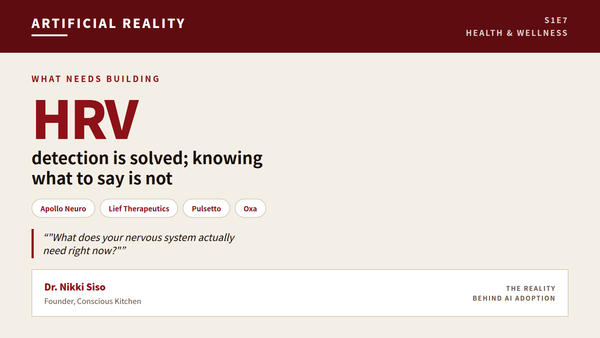
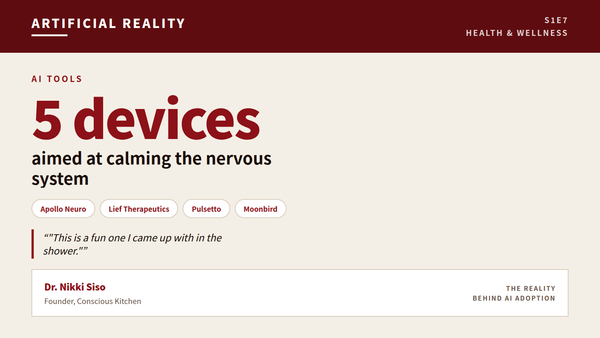
Yeah, so this is a fun one I came up with in the shower as one does. a wearable. If and I'm sure this already exists, but I don't know if it's set up this way. you a wearable that will track your HR, your heart rate variability, HRV.
and then when there's a noticeable shift, like all of a sudden there's an uptick in your heart rate, like you're pulsing faster, then maybe there's an opportunity that it will either vibrate or it will send you a nice little like, hey, take a nice deep breath. You're good. You're safe, right? Like, what does your nervous system actually need right now? What does your little girl need right now? Like you're, you know, you're loved. Don't forget.
Galina Fendikevich · 42:01
Right? that would be so nice.
Dr. Nikki Siso · 42:03
Yeah, something gentle and beautiful that really like reminds you, okay, yeah, yeah, yeah got this, I'm good. And and so that's all AI, right?
Galina Fendikevich · 42:13
Based on your assessment too. So if you are like me, high achiever, chronic stress, I need certain phrases to help me get through correct like the high heart rate moments, which have happened so many times over the past few days alone. And it would have been nice. I I I've talked to Nigel, which is my ChatGPT's name, and always like Nigel, I'm not doing good. I'm so stressed about XYZ. Like help me work through this. But as you mentioned, a wearable or a
better way to deliver that would make a huge difference in my life.
Dr. Nikki Siso · 42:47
Yeah, so when you nailed it because when you go through talks, the the last section is the mind. Right. So it's gonna it's gonna pull out of you in a really beautiful way. Like it's shocking how fast my I had a client go through this and they're like literally it within three questions, it got to the root of my my belief system that's like been challenging me my whole life. Like I've worked with therap, she's like I worked with therapists my whole life, they didn't get to this. No, it is so good.
I mean it's literally trained on the top therapists from around the world.
You you can't no single practitioner could know all of this in any single discipline, let alone 15, right? That all work together. So now it knows, okay, you you have a an achievement, right, story that you gotta achieve to feel loved. and so it's gonna say, Hey, by the way, you're doing a really good job. Like or whatever will land for you in the most potent way. Like think about right now what you are doing, what's what's working for you. Right? Or like what
w think about it could prompt you, be like, what are you doing right right now?
Galina Fendikevich · 43:57
right now it's my mantra. It's my mantra is I'm lucky and I'm grateful. I'm lucky and I'm grateful. And I think about to where I first started, especially in childhood. I mean growing up in poverty and knowing right now I'm lucky and I'm grateful because guess what? I'm in Austin right now in an Uber and I can afford all of this and it it's working out. So getting back to the basics of I'm just grateful to how far I've made it.
So today and I always just have to say I'm lucky and I'm grateful. And even if I don't believe it in the moment, repeating that over and over and over again gets me to calm down. Like yes, okay, let's not hyperfixate on on the current problem. Let's focus on the big picture and how far you've come.
Dr. Nikki Siso · 44:45
Yeah. That's really the the gist of it too is we all need to calm our nervous systems. We're living a wildly out not unnatural life. We're not in nature as n we don't live in nature, basically. We have to like plan a trip to a hike. Right? we're we've got notifications, we've got bills, we've got people depending on us, we've got all of these like status things we've gotta keep up for, right? We gotta look apart, we gotta be perfect, we've got no no wrinkles.
Galina Fendikevich · 45:01
Yes.
Dr. Nikki Siso · 45:15
there's a lot of pressure and and so calming the nervous system, anything that we c if we can use technology for good, it would be to calm the nervous system and to help us get back to baseline of like I'm safe, I'm loved, I'm supported, I'm guided, I'm protected.
Galina Fendikevich · 45:33
Yes. Yeah. I would love for technology to be used for good like that more and for Silicon Valley companies to stop saying that they're going to use technology to wipe out jobs and change their entire rhetoric to say we live in a chaotic world right now with all these pressures, with toxins, with just so much on our mind, like all our minds are heavy, our food is heavy, everything. So to use AI to
prepare us or help us be better armored for the world that we live in today.
Dr. Nikki Siso · 46:09
Yes. Yes. Beautiful. And it's doable. It's totally doable. and I don't think it will you know, it might wipe out some jobs, but I I think the opposite. You can we can just do more. We can actually achieve more and be more human. It it wipes out the jobs that are mundane that people don't want to do. It it it's taken over in like the thing, like I have an automated posting system now. I've set up through Claude.
Galina Fendikevich · 46:24
Yeah.
Dr. Nikki Siso · 46:39
I don't post a single thing. It researches based on all of the skills and training that I've already given it to all these skills. It will pull date data and then create a blog post. From that blog post, it gets sent to Blotato and my Google Docs, and then Blotato creates an Instagram post with a hook and the content and the copy, all scheduled weekly. I don't touch it. I can there's one point where I can do a check and be like, Yep, I like that. Go.
Right? So there's like, you know, I can still prove it. But it all of I hated doing all of that. It was like the worst part of my job. I was like, I didn't want to do any of that. I wanted to help people. Like I just want to be in front of someone, supporting and serving. And so it takes the jobs that I think weren't human off.
And actually allows us to be in our creative free state. Now my job is to how can I partner? How can I collaborate? How can I support a billion people in detoxing this planet? Right now and now I can think scale and then use I actually have the systems that I can use to implement this. Thank you. Very beautiful mission. Thank you. Thank you.
Galina Fendikevich · 47:49
And that's a beautiful mission. Very beautiful. Nikki, this has been a heartwarming conversation. If somebody wanted to work with you or take the talks assessment themselves, how can they do it?
Dr. Nikki Siso · 48:02
Yes, go to consciouskitchenatx.com forward forward slash talks or you'll see the little sandwich in the top right corner and you'll click talks. You can take the assessment right away. It is so powerful. You'll learn so much. So much. Like if you don't get a mind-blown experience, it's fully money back guaranteed. It I have that much faith in it.
Galina Fendikevich · 48:25
have to do my talks assessment tonight. Please. Yes. Thank you for listening. You can find this conversation on YouTube, Spotify, Apple Podcasts, and follow along on LinkedIn and Instagram as well. Thank you so much, Nikki.
Dr. Nikki Siso · 48:39
Thank you, Galina.