The client who circled ChatGPT's answer in pen
A charter client asked ChatGPT if he could anchor in 25 knots of wind, was told yes, and overruled the captain. What it costs the operator.
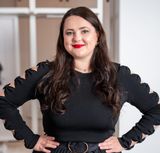

ChatGPT told a charter client he could anchor in twenty-five knots of wind. He could not. Jennifer Kerum, co-founder of Anchor Croatia, a luxury yacht charter brokerage on the Adriatic, took the angry phone call; the captain on the boat said no; the client screenshotted the model's answer, circled it in pen, and sent it to her as evidence.
That is the failure mode operators in physical businesses should plan for. Not AI that is obviously wrong, but AI that is specific, confident and wrong in a way that sounds exactly like being right.
What actually happened in the bay?
A client wanted to anchor somewhere the conditions did not allow, checked with a general-purpose model, and used the answer to overrule the captain.
"Yachting depends on weather, right? And so we had a client that came onto our boat. And he wanted to go in this bay, because he had friends that wanted to also be in this bay, but there was like twenty-five knots of wind, which means there's a lot of freaking wind. And it wouldn't be pleasant to be anchored. They needed to go into a marina. So he asked ChatGPT if he's able to anchor in that wind, and called me very angry and talked to the captain saying that ChatGPT told him that it was possible."
Kerum's answer: "I don't care what ChatGPT says, you need to trust the captain."
The escalation is the part worth studying. "He screenshotted it to me. He even circled it with the pen." That is not a casual query. That is a paying client treating model output as documentary evidence against an expert who was standing on the boat, in the weather, looking at the bay.
Why was the answer wrong?
Because the question was general and the situation was not. Galina Fendikevich, who hosts Artificial Reality, the AI buyer-evidence podcast, identified the mechanism: the model was not "in the place that that guy was in with all of the weather reports" and did not know "the entire situation."
It answered a question about anchoring in the abstract while the client was asking about anchoring right there — in that bay, on that holding ground, in that vessel, that afternoon. Nothing in the answer signalled the difference.
Where does this show up when nobody is in danger?
In pricing and in itineraries, on ordinary sales calls, constantly. The anchoring story is dramatic; the routine version costs more in aggregate.
On pricing: "They'll find something and then they'll come to me and they'll say, 'Well, this is the price.' And I'm like, I understand that's what it said, but it's not."
On geography: "I literally had a client asking me if they can go from Split to Kotor in five days." Kerum's handling is to open a map and politely explain that it is not possible. The client's response was to cite the model's recommendation back at her.
So a broker now spends part of every sales conversation disproving an authority the client trusts more than her. That cost did not exist three years ago, and it lands specifically on the person with the actual expertise.
Is Kerum saying don't use AI?
No. Her read is more generous than most operators would give.
"I wouldn't say it's doing harm. It's just, on certain cases, I think it's like: what are you doing, ChatGPT, stop saying that. But it's learning. It's learning. In a year it won't do that."
She does not treat any of this as a reason to avoid AI. She treats it as a reason to build something better suited to the domain, which is what she is currently doing — a separate AI-focused brand, Luxury Yacht Rentals, is due in the coming months.
What should you do when clients bring you AI answers?
- Ask what they asked, not what they were told. The anchoring answer was probably reasonable for the question it received. The question was missing the bay, the boat and the day.
- Put the live-conditions rule in writing before departure. Anchoring, routing and weather calls belong to the captain. Say so while the client is still excited, not while they are angry.
- Publish your own numbers. Clients arrive with pricing that is not real because nothing more accurate was reachable. Real ranges on your own pages are the cheapest correction available.
- Answer the geography question once, publicly. Split to Kotor in five days comes up more than once. A written answer is faster than a map on every call.
- Treat every wrong answer as a demand signal. Clients ask because they want to know. Nothing better exists for the domain yet.
Why will this keep happening?
Because the model does not correct itself and it does not tell the client to ask the captain. The broker absorbs the cost of disproving it, in the middle of a luxury service relationship, to a client who has paid a great deal of money and now believes they have been contradicted for no reason.
Every industry where the right answer depends on conditions a model cannot see is going to get its own version of the circled screenshot. In yacht charter, the boundary is already clear and worth stating to every client before they board: the model can research the destination, and the captain decides whether you can stop there.
Which decision in your business are clients currently trying to make without you?
Where this comes from
S1E2: How a luxury yacht company uses AI without losing the personal touch — the full interview with Jennifer Kerum. Listen or watch: YouTube, Spotify or Apple Podcasts.