Best AI tools for client accountability in coaching
Practice Better, Coach Catalyst, Healthie, Rocky.ai and Vibly, compared against what a holistic health practitioner says automation cannot do.
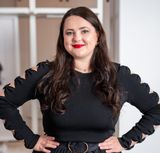
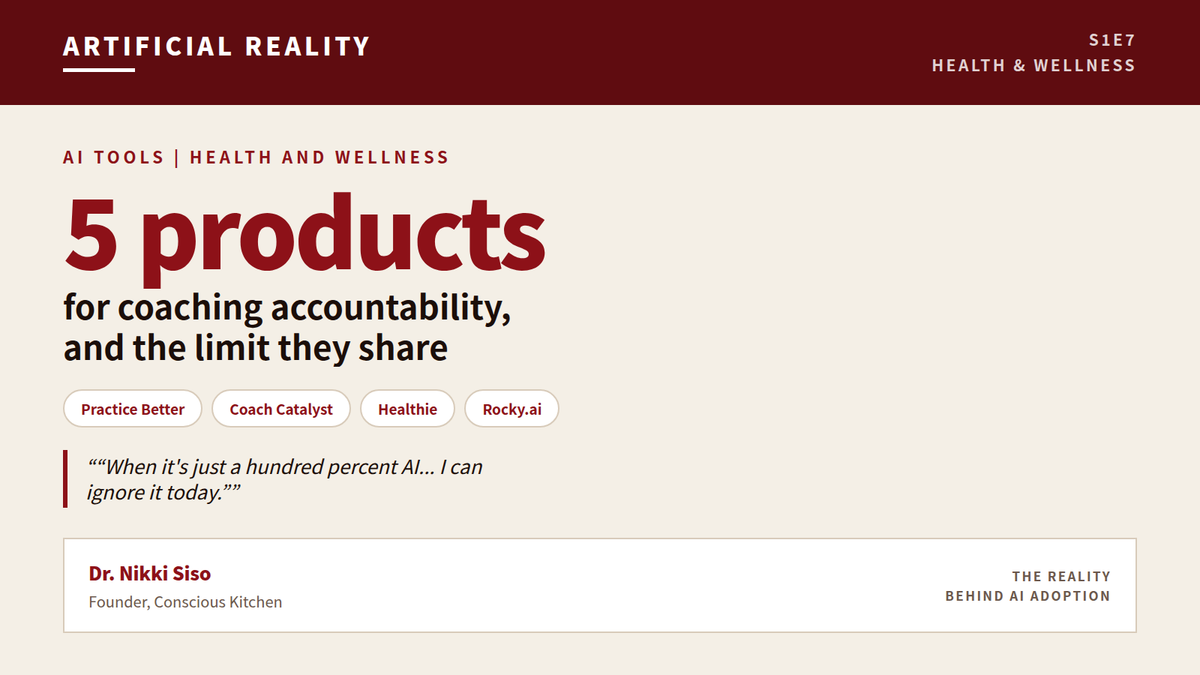
Five products address client accountability for coaches: Practice Better and Healthie provide practice management for health and wellness practitioners, Coach Catalyst focuses on habit tracking and accountability, and Rocky.ai and Vibly work on AI coaching. Before buying any of them, weigh what Dr. Nikki Siso, a certified holistic health practitioner and founder of Conscious Kitchen, told Artificial Reality: accountability that is fully automated does not work.
What is coaching accountability software?
Coaching accountability software prompts clients between sessions, collects their responses, tracks adherence to a program, and surfaces to the practitioner which clients need attention, so that follow-through is monitored continuously rather than only reviewed at the next appointment.
The distinction from adjacent categories is who the system serves. Habit-tracking apps serve the individual and answer to nobody. Practice management software handles scheduling and records. Accountability sits between them: it exists to close the loop between what a client agreed to and what a practitioner knows about.
Which products should a health practitioner look at?
Five, identified by Artificial Reality as apparently relevant to the requirements Dr. Nikki Siso described. None was named or endorsed by her, and none has been independently tested.
Practice Better — practice management for health and wellness practitioners; growth stage. The most established option serving this practitioner type. Verify whether check-ins can carry your own voice and pre-recorded audio, and whether responses route intelligently or simply accumulate in a log.
Coach Catalyst — habit tracking and accountability for coaches; bootstrapped or early stage. The most narrowly focused on this exact problem rather than treating it as one module of a larger platform. Verify whether it flags clients needing attention proactively or requires you to go looking. That distinction is the difference between automation and a dashboard.
Healthie — practice management and telehealth; Series B. The best-capitalized entrant here, and the telehealth positioning suggests it is built for practices handling clinical information, worth confirming given the personal material a holistic assessment collects. Verify whether the scope is proportionate to a solo practice, and what setup involves.
Rocky.ai — AI coaching; pre-seed or seed, Techstars-backed. Included because it addresses the between-session interaction directly. Judge it against Siso's constraint: an AI conversation with no human downstream is the configuration she says clients learn to ignore.
Vibly — a coaching platform; early stage. Artificial Reality's research on this company is thin beyond stage, so treat it as a name to investigate rather than a described fit. Ask what it does, who it serves, and how accountability specifically is handled.
How do you choose between them?
Start from what can genuinely be automated. In Siso's practice the prompting and the monitoring are automated and the witnessing is not. Six questions to put to a vendor before you pay:
- What am I actually automating? A product sold on removing you from the loop is selling the wrong thing.
- What happens when a client goes quiet? Silence is the signal that matters most and the one systems most often ignore.
- Does my voice survive? Siso writes her daily text messages in her own voice and sends pre-recorded voice memos so clients hear her. She reports that this takes hours to set up and that she goes through every message to check the tone.
- What triggers an alert to me? Content-based routing beats a weekly digest.
- Where does the data live? Health coaching collects sensitive personal information. Ask where it is stored and who can access it.
- Can I tell clients honestly who reads what? The mechanism only works if the answer is true.
What does automated monitoring look like in practice?
Siso's own configuration is the clearest illustration. Clients on her detox program report a daily score, and a low energy score tells her the detox symptoms have started.
"I've set up AI when someone's going through our detox program that if they check a score of like feeling really tired today, I know: okay, they're going through their detox symptoms have started, and I can check in on them and be like: all right, today rest. Don't go try and do 10 things, honour your body and rest."
The system watches; she arrives when it matters.
"All of that can be automated, that I get the prompt when they need me."
What none of these products resolves
If the client knows nobody is reading, they stop replying. That is Dr. Nikki Siso's central claim, and it is a claim about people rather than about software.
"There has to be a human at some point in the chain. So even if AI did the automatic prompting of, hey, what'd you eat today — your reply, if you knew, was gonna get seen by a human, then it challenges your integrity to not reply. That's what's missing."
So buy for the parts that are mechanical: the asking, the collecting, the flagging. Spend the hours you get back on the part no vendor can supply. This week, before you shortlist anything, pick the one client who has gone quiet and contact them yourself.
Where this comes from
S1E7: How a non-tech founder built a 15-agent AI business on Claude — the full interview with Dr. Nikki Siso. Listen or watch: YouTube, Spotify or Apple Podcasts.