Counting the sugar: the inventory tool a food business wants
Luisa Ramirez wants something that walks in and counts precisely — scan the shelf or weigh it. Without exact counts, she can't price a plate properly.
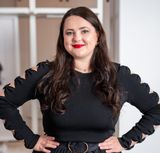

Asked what else she would like Silicon Valley to build, Luisa Ramirez did not name a marketing feature. She asked for inventory: something that comes into the place, counts, and keeps precise measurements. Her reason is pricing. Without an exact count of every input, including the sugar and the salt, the cost of a plate is an estimate, and so is the margin.
The request in her words
"I would love for them to like build something that can come into the place and do inventory and keep measurements, perfect measurements for everything. I think we still don't have anything out there that can help us with that."
She suggests two mechanisms herself: scan the items, or put them on a scale that reads them. She is not prescriptive about which. The requirement is precision without a person walking the shelves with a clipboard.
Why precision, specifically
This is the part that distinguishes her ask from generic stock management. She is not trying to avoid running out of things. She is trying to cost a dish:
"Especially in a restaurant, there's so many like things that you have to count — like even sugar, salt. You have to count every single thing to actually have the precise price of the cost of the item that you're selling."
A restaurant that does not know its exact input quantities does not know its food cost, and a business that does not know its food cost is pricing by feel. Her co-owner runs into the identical problem from the other direction: Sara Rojas describes discovering after an event that the time and the add-ons had eaten the margin she thought she had.
Two owners, two halves of the same business, both saying the numbers only become visible after it is too late to change the price.
The cross-industry parallel
Galina Fendikevich raises a connection during the interview, and it should be attributed to her rather than presented as an independent finding. She had recorded another episode that morning, and the same inventory request had come up from a doctor: hospitals also count by hand, it also takes a long time, and the suggestion there was the same — say it into an AI, or take a picture of the shelf, instead of standing there counting.
Luisa's response to hearing it was immediate. Retail and restaurants too. "I think restaurants — that will be such a great app for a restaurant. Like every restaurant in the city, in New York City and in the world will just rush to it."
That enthusiasm is worth discounting appropriately: it is an operator reacting to a described product, not a purchase. But the fact that the same unmet need surfaced independently in a hospital and a charcuterie shop on the same day is the more interesting data point.
Why they think the technology is ready
Galina's argument on the record is that computer vision has become very good, and that the capability has mostly been pointed at shopping. She gives a first-hand example: she saw a microphone in an Instagram reel, screenshotted it, asked ChatGPT what it was, and got a link to buy it.
Luisa's reaction connects it to something older. A colleague at a restaurant when she was eighteen had wondered aloud whether you might one day photograph an item, click it, and be taken to where you could buy it. That now exists.
Galina's conclusion, and the reason this is filed as a product request rather than a wish: she spent two and a half years in San Francisco watching this capability get applied almost exclusively to consumer shopping, largely through Amazon. The same technology pointed at a stockroom — in a restaurant, a shop or a hospital — is the same technology.
What a builder should take from it
The buyer here is a two-owner food business that already pays $37 a month for a marketing tool and considers a four-figure agency retainer impossible. Price the inventory product accordingly. And note what is being asked for: not forecasting, not ordering automation, not a dashboard. A count you can trust, without a person doing the counting.
Where this comes from
S2E2: The secret AI strategy this small NYC business uses to save thousands — the full interview with Sara Rojas and Luisa Ramirez. Listen or watch: YouTube, Spotify or Apple Podcasts.